

The rail is packed, the drawers barely close, and you are standing in front of all of it with genuinely nothing to wear. It feels absurd, so most people blame themselves: no taste, no discipline, time to buy something new.
None of that is the real problem. "Nothing to wear" is almost never a shortage of clothes. It is a shortage of clothes that work together, fit you today, suit the life you actually lead and are clean right now. Each of those has a different cause, and each one has a different fix.
The pattern behind it
Look at what you really wear over a month and a pattern shows up in nearly every wardrobe: a small group of pieces does almost all the work. The same jeans, two or three tops, one jacket, one pair of shoes. The rest gets looked at, considered and put back. (We did the maths on how small that working group usually is in how many clothes do you actually need.)
That is not a character flaw. Those few pieces are the ones that fit, go with everything and feel like you. The question is why the other items never join them. Here are the five reasons that come up again and again.
1. Orphans: pieces that go with nothing
An orphan is an item you bought on its own merits, with no plan for what it would be worn with. The printed shirt that clashes with every pair of trousers you own. The green skirt that needs a top you do not have.
Orphans are the biggest single cause of a full but useless closet, because each one looks like an option and behaves like a dead end.
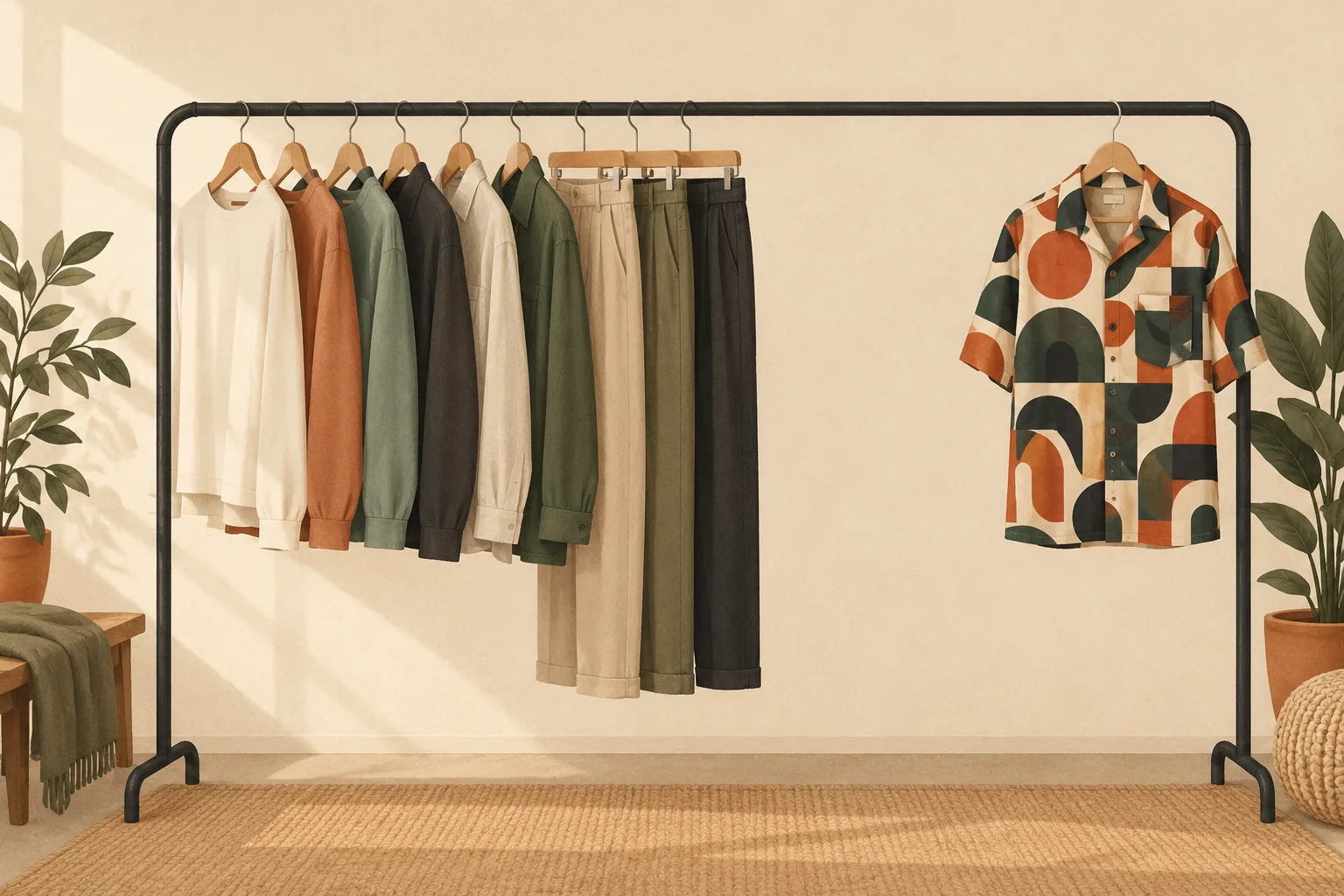
The fix: for each orphan, try to name three complete outfits it belongs to, using only what you already own. If you can, write them down or save them, because the reason it went unworn was that nobody had done that work. If you cannot name even one, it is either a single missing piece away from working (buy that piece deliberately) or it is time to let it go.
2. The almost wardrobe
The second group is clothes that are nearly wearable. Trousers a little too tight. A coat missing a button. A jumper that is fine apart from the stain on the cuff.
Every one of these takes up space and attention, and none of them can be grabbed on a busy morning. You see them as options, then reject them one by one.
The fix: pull out everything that fails on fit or condition and sort it into three piles: repair this week, alter, or let go. Clothes that will fit "after a few months" are not part of your wardrobe today, so store them away from the rail you choose from every morning.
3. A wardrobe for a different life
Many closets are dressed for a life their owner does not lead. Plenty of going out tops for someone who goes out twice a year. Formal shoes for an office that went casual. Meanwhile the clothes for an ordinary Tuesday, the ones you need most, are thin on the ground. Shopping is aspirational; getting dressed is practical.
The fix: write down what a normal week asks of your clothes, say five work days, two relaxed days, one evening out and two workouts. Then count how many outfits you own for each. The gap is usually obvious within a minute, and it tells you what to buy next and what to stop buying. If you are not sure what "you" even looks like in clothes, our guide to finding your personal style starts from the pieces you already reach for.
4. The laundry bottleneck
Remember the small group of favourites doing all the work? Because they are worn constantly, they are also washed constantly. So on any given morning, a good share of the clothes you actually like are in the basket, and what is left on the rail is everything you have already rejected.
That is why "nothing to wear" tends to strike midweek.

The fix: widen the working group so the favourites get a rest. Pick two or three pieces from the rail that are close cousins of your favourites (same shape, similar colour, different fabric) and build outfits around them on purpose. When a favourite goes into the wash, its understudy is already waiting.
5. Too many choices you cannot see
The last reason is about what the closet looks like, not what is in it. Clothes crammed together, folded into deep piles or pushed to the back of a shelf are effectively invisible. And faced with a wall of options and no plan, most people do the sensible thing under time pressure: they pick the safe outfit they wore last week.
The fix: make fewer choices, earlier. Thin the rail so you can see every piece, move out of season clothes into storage, and decide the outfit the night before rather than at 7.40 in the morning. Our guide to planning outfits for the week walks through a five minute version of that habit.
Fix it in one afternoon
You do not need to tackle all five reasons separately. One focused afternoon covers most of them:
- Empty one section of the closet at a time onto the bed.
- Pull out the almosts (fit or condition problems) into their repair, alter or let go piles.
- Test every remaining piece by naming at least one complete outfit it belongs to. Orphans that fail go in a separate pile to think about.
- Put back only what passed, with space between hangers so every piece is visible.
- Turn every hanger backwards. When you wear something, hang it back the normal way. In a couple of months you will see exactly what you really wear, without guessing.

The hanger trick is old school wear tracking, and it is brutally honest.
Let the app do the remembering
Everything above works with a pen and a free afternoon. The hard part is keeping it up: remembering what you wore, what goes with what and what is in the wash is tedious bookkeeping.
That is the job Closet DJ takes on. Every time you mark an outfit as worn, each piece's wear count updates, and Wear Insights shows your most worn pieces next to the forgotten ones, so the hanger trick runs itself. The outfit generator builds complete looks from clothes you already own, which is the quickest way to find out whether an orphan really goes with nothing. The Style Assistant will happily suggest outfits around a piece you have been ignoring. And with laundry tracking on, suggestions lean on clean pieces, so the midweek bottleneck stops catching you out.
Frequently asked questions
Why do I feel like I have nothing to wear when my closet is full?
Usually because most of your clothes do not work together, fit badly, need repair, suit a different lifestyle or are hidden from view. A small set of favourites does almost all the work, and when they are in the wash, what remains feels unwearable.
How do I stop saying I have nothing to wear?
Remove what does not fit or needs fixing, make sure every remaining piece belongs to at least one complete outfit, and plan tomorrow's outfit the evening before. Fewer, visible, ready to wear options beat a packed rail every time.
What is the hanger trick for clothes?
Turn every hanger in your closet backwards. Each time you wear something, hang it back facing the normal way. After a few months, anything still facing backwards is something you do not actually wear, which makes decluttering decisions much easier.
Should I buy new clothes if I have nothing to wear?
Not before you know why. Buying another standalone piece often adds another orphan. Work out which outfits you are short of for a normal week, then buy the specific piece that would make several of your existing clothes wearable.
Turn a full closet into outfits you will actually wear. Closet DJ tracks what you wear, surfaces what you have forgotten and builds outfits from clothes you already own. Try it free.
Put this guide to work
Now try it on your own closet.
Closet DJ is free to start. Add your clothes and the Style Assistant answers with pieces you actually own.
Get new posts in your inbox
One email per new post, written by the Closet DJ team. No spam, unsubscribe anytime.