How Many Clothes Do You Actually Need? The Honest Math
Search this question and you'll find confident answers everywhere: 33 items. 37 items. A "French wardrobe" of 10. All of them are someone else's wardrobe presented as a law of nature.
Here's the uncomfortable truth: the right number depends on exactly three things, and none of them are aesthetic. They are your laundry rhythm, the number of different "modes" your life has, and your climate. Get those three right and the number falls out on its own.
The formula
Start with this:
(Days between laundry loads + 2 buffer days) x number of life modes = minimum outfits needed
Then work backwards to items. An "outfit" needs roughly one top, one bottom (or a dress), and, in cooler months, a layer. Since bottoms and layers can repeat several times before washing, you need far fewer of them than tops.
A worked example. Say you do laundry once a week and your life has two modes: office work and casual weekends.
- Work mode: 7 days of laundry cycle covers 5 work days, so you need 5 work outfits plus 2 buffer. That's 7 work tops, but only 3 work bottoms, because trousers handle 2 to 3 wears each.
- Casual mode: 2 weekend days plus evenings. 4 casual tops, 2 casual bottoms.
Total: 11 tops, 5 bottoms, plus 3 to 4 layers shared across both modes, 1 or 2 dresses if you wear them, and 3 to 4 pairs of shoes. Around 25 pieces per season, and that's a complete, zero-stress wardrobe.
Why laundry rhythm beats every other rule
The single biggest predictor of "I have nothing to wear" is not wardrobe size. It's running out of clean favourites before the next wash. If you wash every 10 days but own 6 tops you like, you will spend 4 days of every cycle wearing things you don't like. That feels exactly like having nothing to wear, even with a full closet.
Two ways to fix it:
- Wash more often (changes the formula input)
- Own more of what you genuinely wear (changes the output)
Most people accidentally choose a hidden third option: buy more random clothes that don't fix the gap. That's how a closet hits 150 items while the same 20 get worn.
The 20 percent problem
Wardrobe studies and closet-tracking apps keep landing on the same figure: most people wear about 20 percent of their clothes 80 percent of the time. When Closet DJ users digitise their closet and start tracking what they actually put on, the pattern is usually visible within a month: a small rotation of favourites, and a long tail of items worn once or never.
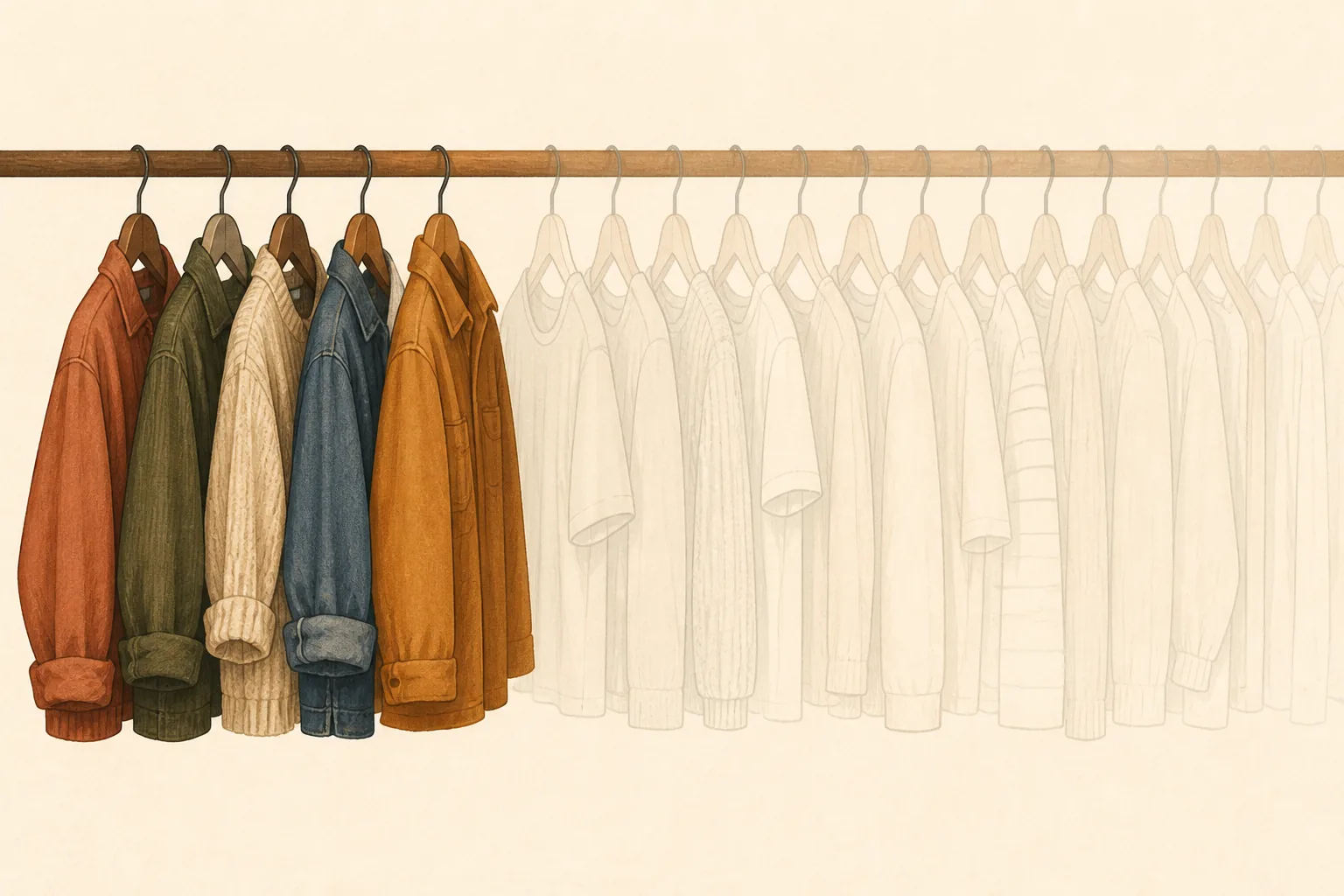
The long tail isn't harmless. It costs you:
- Decision time. Every unworn item is visual noise you filter past each morning.
- Money signal. If you can't see that you own 9 near-identical navy tees, you'll buy a tenth.
- Storage. Small-space dwellers pay rent on clothes they don't wear. (More on that in our small closet organization guide.)
Count outfits, not items
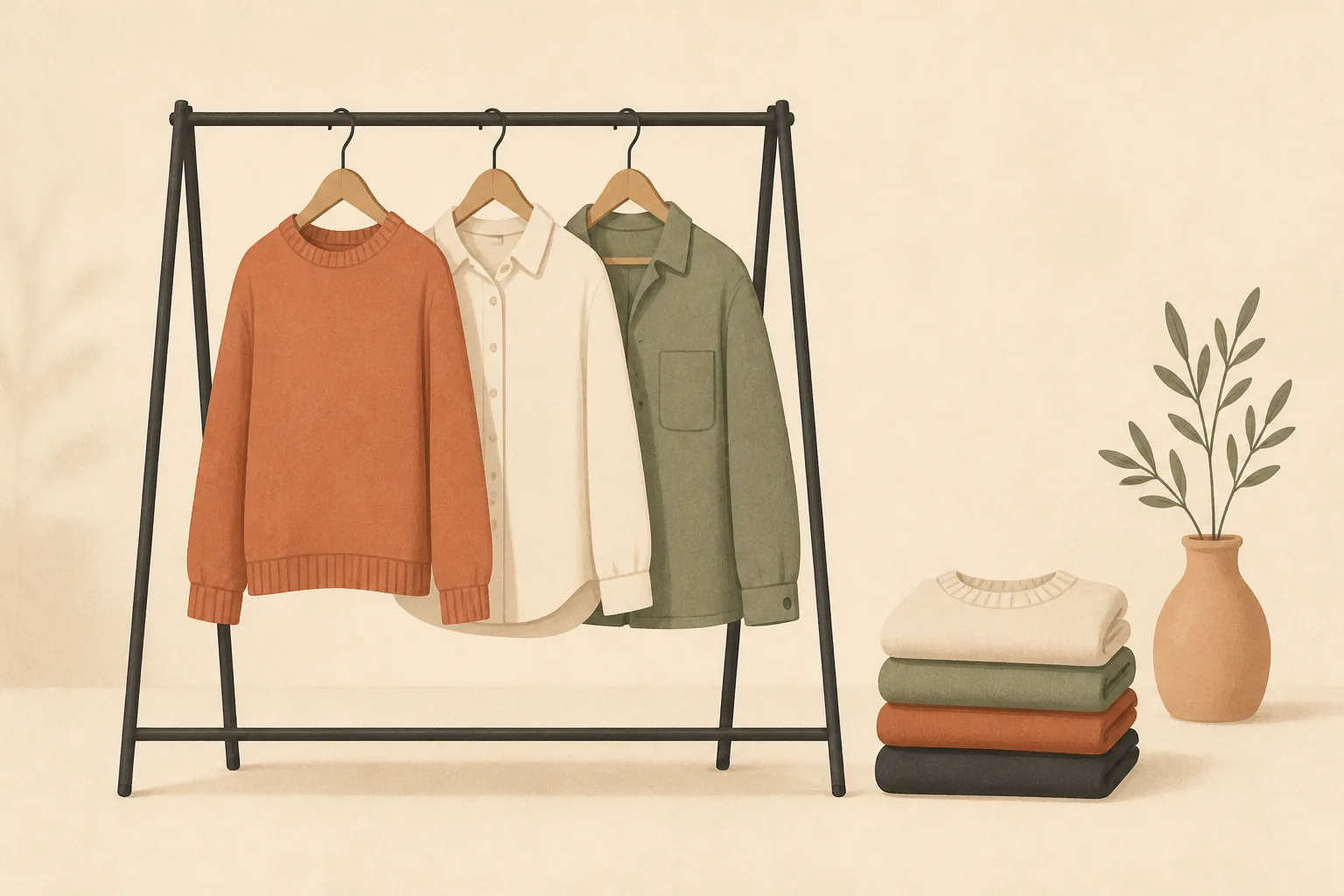
A 40-piece wardrobe where everything matches produces more outfits than a 120-piece wardrobe of impulse buys. That's the whole argument for a capsule wardrobe, but you don't need to go full capsule to benefit.
Try this instead: pick any 10 items you own and count the genuinely wearable combinations. If 10 items give you fewer than 8 outfits, your wardrobe has a compatibility problem, not a size problem. Common causes:
- Tops and bottoms bought in isolation, each needing "the right thing" to pair with
- Too many statement pieces, not enough connectors
- Colours that fight: warm-toned tops over cool-toned bottoms, prints that clash
The fix is boring and effective: every new purchase must combine with at least three things you already own. If you can't name the three while standing in the shop, it goes back on the rack.
Season by season, the numbers shift
Climate changes the ratios more than most guides admit:
- Hot climates: more tops (sweat means single wears), fewer layers, lighter fabrics that wash fast.
- Cold climates: fewer tops get seen, so knits and layers do the style work. Base layers extend time between washes for outer pieces.
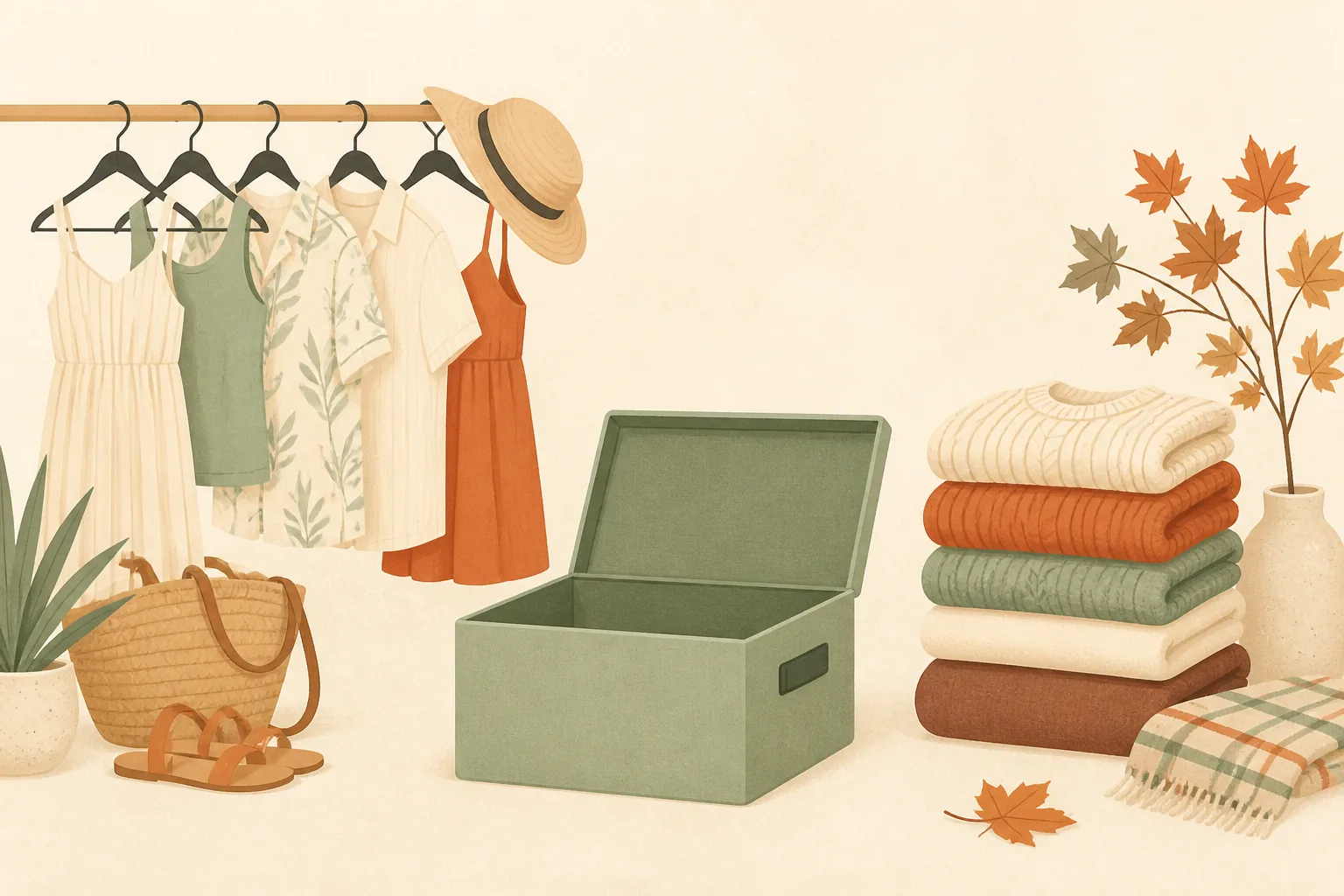
- Four real seasons: run two rotations and store the off-season. Our seasonal wardrobe switch guide covers the handover step by step.
A quick self-audit
Answer these honestly:
- How many days pass between laundry loads?
- How many distinct modes does your week have? (Work, casual, gym, occasion)
- In the last 30 days, how many different tops did you actually wear?
If question 3's answer is far below what you own, you don't need to buy anything, and you probably haven't for a while. What you need is visibility: which pieces earn their space, which don't, and what the real gaps are.
That's a tracking problem, and it's easier to solve with software than with willpower. Closet DJ logs what you wear, shows cost-per-wear and neglected items, and its outfit generator finds combinations you didn't know you owned. Most people discover they need fewer clothes and one or two very specific purchases.
Frequently asked questions
Is there a single right number of clothes to own?
No. A weekly-laundry office worker in Malta and a daily-laundry parent in Oslo need different wardrobes. Use the formula: (days between laundry + 2) x life modes = outfits needed, then translate outfits into items.
How many clothes does the average person own?
Surveys typically land between 80 and 150 items, with about 20 percent worn regularly. The gap between owned and worn is the real problem, not the total.
What should I get rid of first?
Duplicates of duplicates, anything that hasn't fit for a year, and pieces that need "the right occasion" that never comes. Box uncertain items for 90 days; whatever stays boxed is a confident donate.
How do I know what my wardrobe is missing?
Track wears for a month. Gaps show up as friction: the bottoms you wash urgently because nothing else works, the layer you reach for daily. Buy for those gaps only.
Want the math done for you? Closet DJ tracks what you wear and shows exactly which clothes earn their place. Start free.
Ready to remix your closet?
Try Closet DJ free. Organise your wardrobe and let AI build outfits from what you already own.
Get new posts in your inbox
One email per new post, written by the Closet DJ team. No spam, unsubscribe anytime.