How to Find Your Personal Style (When Your Closet Feels Random)
Most advice on finding your personal style starts with a mood board: a few hundred photos of people wearing clothes you do not own, in places you do not go. Then you open your wardrobe and nothing in it matches.
There is a better starting point, and it is already hanging in your closet. Your personal style is not something you invent from scratch. It is a pattern in what you choose, wear and keep, and the job is to find that pattern, give it a name, and then dress it on purpose.
Why your closet feels random
A wardrobe that feels random is rarely full of bad clothes. It is usually full of clothes bought for different versions of you: the job you had three years ago, a holiday, a trend that lasted one season, a gift, a sale. Each piece made sense on the day it arrived. Together they do not talk to each other.
That is why a full closet can still leave you with nothing to wear: the pieces belong to four different stories. Finding your style is mostly about deciding which of those stories is actually yours.
Step 1: Start with what you already reach for
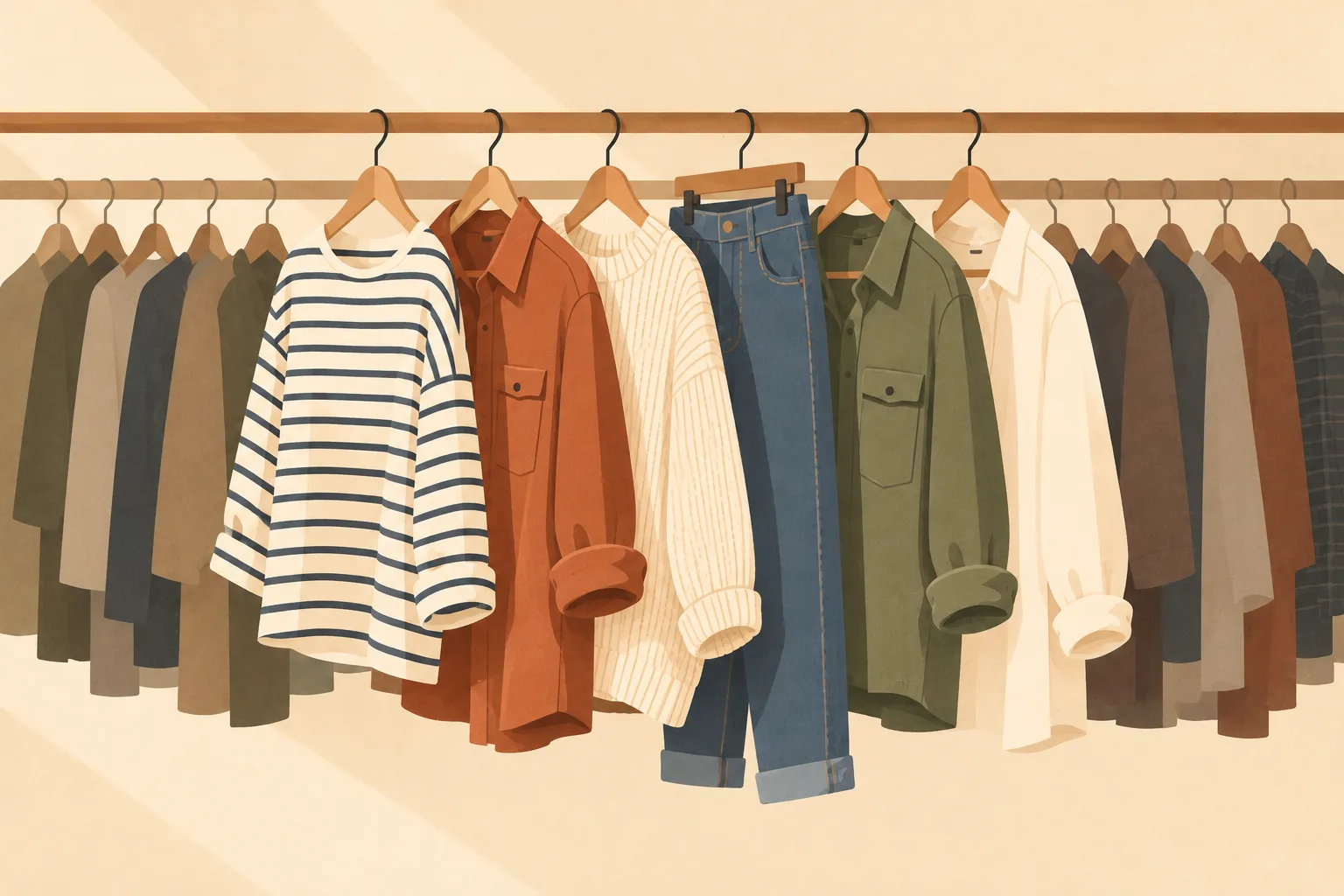
Ignore the clothes you think you should like. Look at the ones you actually wear.
For two weeks, notice what you put on when nobody is making you dress a particular way. Then go through your wardrobe and pull out every piece that passes at least one of these tests:
- You wear it the moment it is clean. The jeans that never make it to the back of the drawer.
- You feel like yourself in it. Not dressed up, not in costume, just you on a good day.
- You have bought it more than once. A second striped top, a third pair of the same boots. Repeat purchases are the loudest style signal there is.
Most people end up with between ten and twenty pieces. That pile is your raw material. Everything else waits for now.
Step 2: Find the pattern in your favourites
Lay the pile out on the bed and look at it as a set, not as individual items. You are looking for what keeps coming back. Four questions do most of the work:
- Colour. Is it mostly neutrals, mostly earth tones, mostly one bright accent? If you have already worked out which colours suit you, you will often find your favourites cluster in that palette without you having planned it.
- Shape. Fitted or relaxed? Cropped or long? Structured shoulders or soft drape? Most people have a silhouette they return to without thinking.
- Fabric and texture. Crisp cotton, chunky knits, denim, leather, silk, technical fabrics. Texture often defines a style more than colour does.
- Detail level. Plain and clean, or pattern, print, hardware and layering?
Write down what you see, not what you wish you saw.
Step 3: Name it in three words
Now compress your notes into three words. This is the single most useful exercise in this whole guide, because three words are short enough to remember in a shop and specific enough to say no to things.
Good three word styles mix a mood, a shape and a reference point, for example "relaxed, earthy, practical", "sharp, minimal, monochrome" or "soft, vintage, romantic". Avoid words that describe everyone, such as "comfortable" or "classic", unless you pair them with something more specific.
If you want a shortcut, existing style names can help as a starting vocabulary. Minimalist, Scandi, preppy, old money, streetwear, dark academia, bohemian, workwear and cottagecore each come with a fairly settled set of colours, shapes and pieces. You do not have to pick one and wear it like a uniform. Most real wardrobes sit across two of them, such as Scandi with a workwear edge, or preppy with a vintage streak. Naming the blend is often more accurate than choosing a single label.
Step 4: Test your style words against the rest of your closet
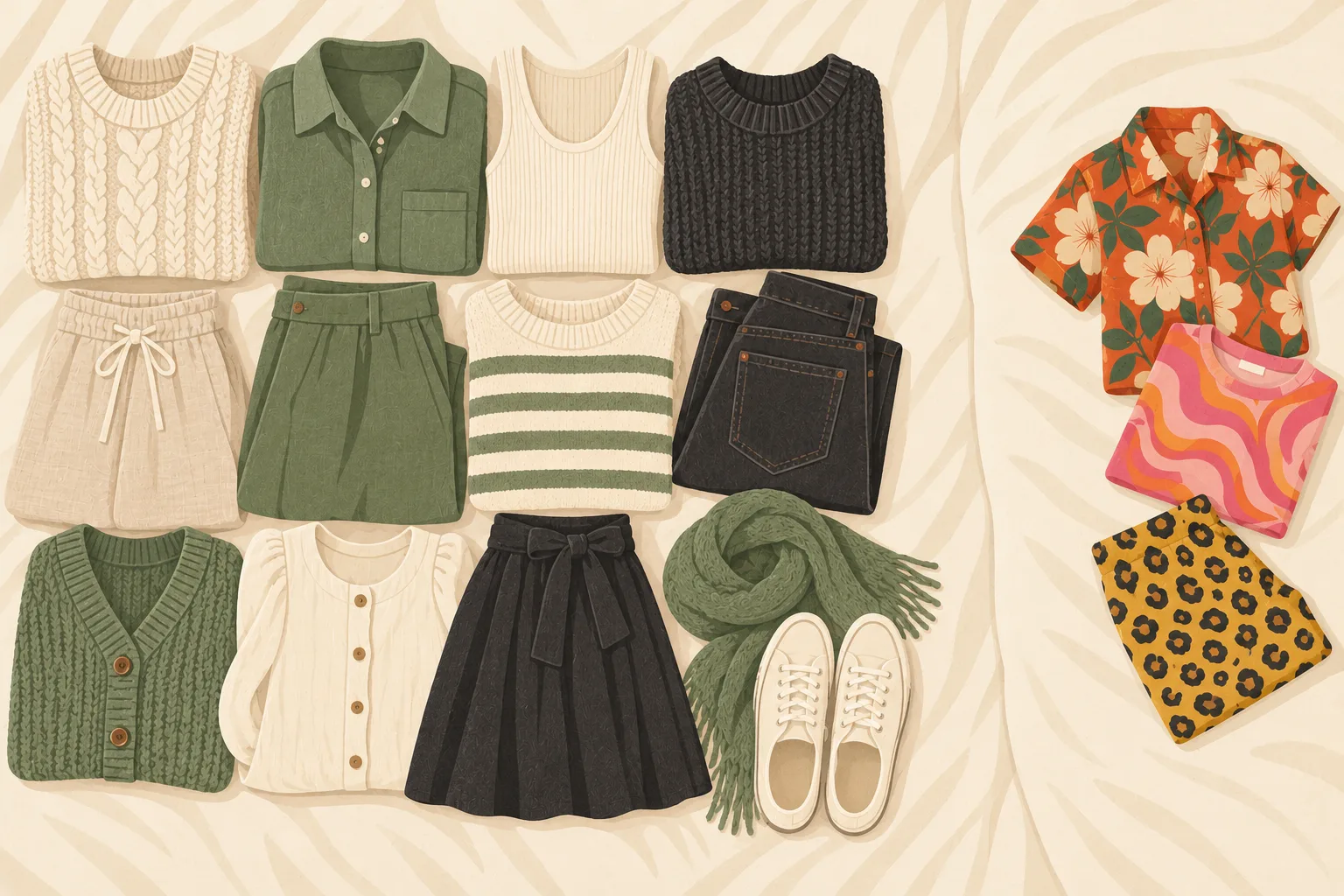
With your three words in hand, go back to the pieces you did not pull out in step 1 and sort them into three piles:
- Fits the words. These rejoin the wardrobe. You probably undervalued them because they had nothing to go with.
- Could fit with the right partner. A good piece missing a match. Note what it needs, but do not buy it yet.
- Does not fit. The trend buys, the old job, the gift you never liked. Store them out of sight for a month. If you do not miss them, let them go.
This is also where a wardrobe starts to shrink to a size you can actually manage. If you want a rough sense of how much you need once the noise is gone, our guide to how many clothes you really need puts numbers on it.
Step 5: Turn your style into outfit formulas
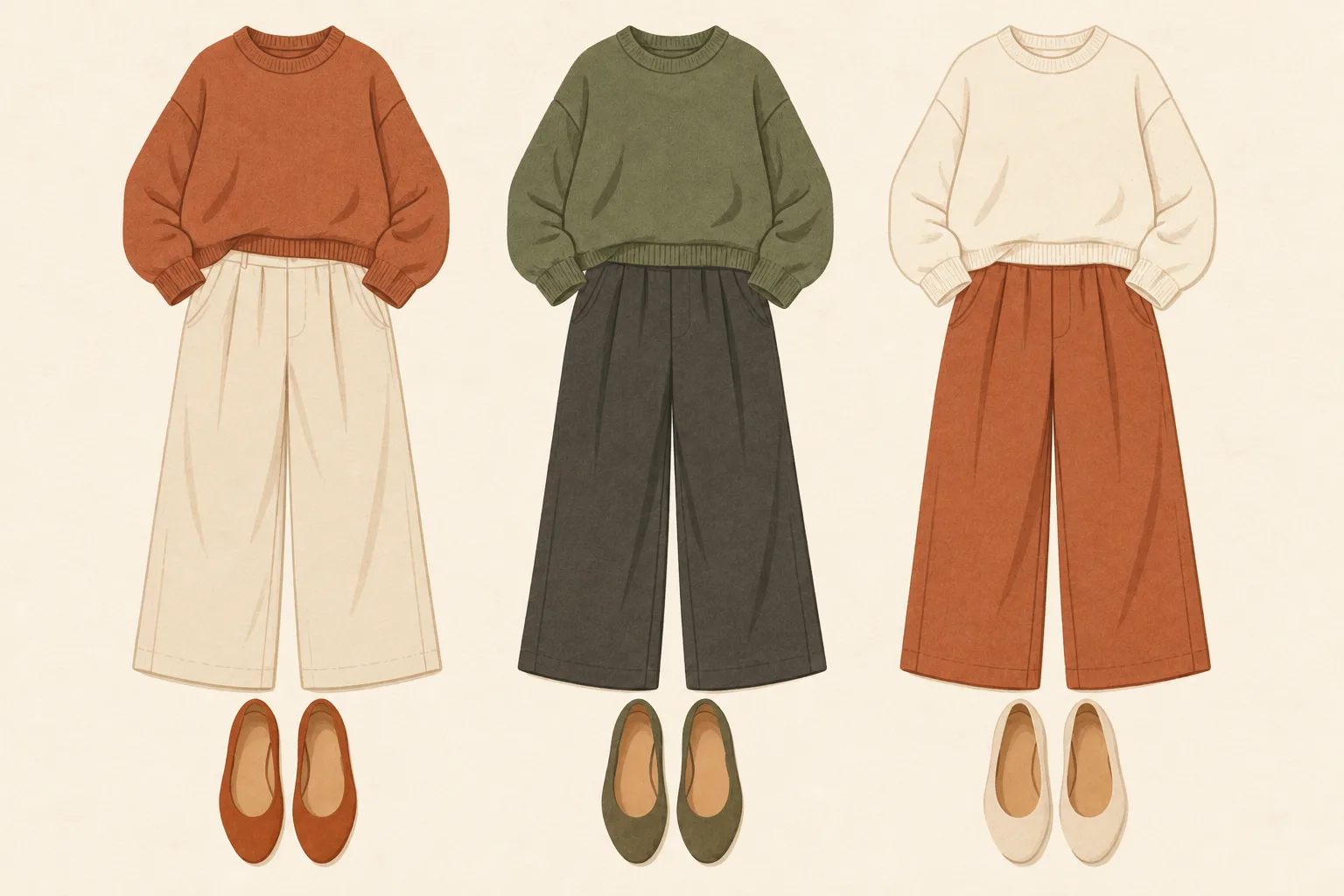
A style is only useful if it gets you dressed on a Tuesday morning. The fastest way to make that happen is to turn it into two or three outfit formulas: repeatable combinations you can fill with different pieces.
For "relaxed, earthy, practical" that might be wide trousers, a knit and flat leather shoes, or straight jeans, an overshirt and boots. For "sharp, minimal, monochrome" it might be tailored trousers, a fine knit and loafers, all in one colour family. Every outfit you build from a formula is new, yet all of them clearly look like you.
Formulas also make planning a week of outfits a ten minute job, and a capsule wardrobe stops being an abstract idea and becomes a short list of pieces that fill your formulas.
Step 6: Shop with a filter, not a feeling
Your three words now do their most valuable job: deciding what does not come home. Before you buy anything, ask two questions. Does it fit my three words? Does it complete at least two outfits with things I already own? If the answer to either is no, it is a costume, not a wardrobe piece.
Expect your style to drift as your life changes. Rerun the favourites exercise once a season, usually when you do your seasonal wardrobe switch, and adjust a word if your favourites have moved.
Let your closet show you the pattern
The hard part of all this is not the method. It is seeing your own clothes clearly enough to notice the pattern, and then remembering it at seven in the morning.
That is where Closet DJ helps. Once your wardrobe is in the app, wear tracking shows you which pieces you actually reach for, so step 1 is built from data instead of guesswork. Choose the styles that feel like you in your profile, and the Style Assistant builds complete outfits from your own clothes in that direction and explains why each combination works.
Frequently asked questions
How do I figure out my personal style?
Start with the clothes you already wear most and feel best in, then look for what they have in common: colour, shape, fabric and level of detail. Sum that up in three words, test the words against the rest of your wardrobe, and turn them into two or three outfit formulas you can repeat.
What are the main types of fashion styles?
Commonly named styles include minimalist, classic, preppy, old money, Scandi, bohemian, streetwear, sporty, workwear, vintage, dark academia, cottagecore and edgy or grunge. Most people sit across two of them, so it is usually more accurate to describe your style as a blend than to pick one.
How long does it take to find your personal style?
You can get a clear first answer in an afternoon by sorting your favourites and naming the pattern. Refining it takes a few months of wearing and noticing, and it keeps evolving as your life changes, which is why it helps to revisit it each season.
Can you find your style without buying new clothes?
Yes, and that is the best way to do it. Your current wardrobe already contains the pieces you choose again and again. Finding your style first and shopping second stops you buying more of the random pieces that made your closet feel chaotic in the first place.
Stop guessing what your style is. Closet DJ reads the clothes you already wear and builds outfits that look like you. Try it free.
Ready to remix your closet?
Try Closet DJ free. Organise your wardrobe and let AI build outfits from what you already own.
Get new posts in your inbox
One email per new post, written by the Closet DJ team. No spam, unsubscribe anytime.