
Black Friday lands on 27 November this year, and the early deals are already in your inbox. Some of them are genuinely good. The problem is rarely that the discount is fake. The problem is that a discount makes it very easy to buy something you would never have bought at full price, and a garment you never wear is the most expensive thing in your closet, whatever it cost.
This guide is a short test to run on any piece of clothing before it reaches the basket. Five questions, about a minute each. It will not stop you buying things. It will stop you buying the wrong things.
Why sale clothes so often go unworn
Most people have at least one sale purchase still in a drawer with the tags on. That is not a lack of willpower. Sales are built to shorten your thinking time:
- Countdown timers and "only 3 left" labels turn a decision you would normally sleep on into one you make in seconds.
- The discount becomes the reason. "40 percent off" quietly replaces "I need this" as the case for buying.
- You shop for a different life. The sequinned top for parties you rarely go to, the hiking jacket for the walks you keep meaning to take.
- Bundles add the item you did not want. "Three for two" means paying for two things and taking home a third you never chose.
None of this is a reason to skip the sales. It is a reason to arrive with a plan.
Before the sales start: write a short list
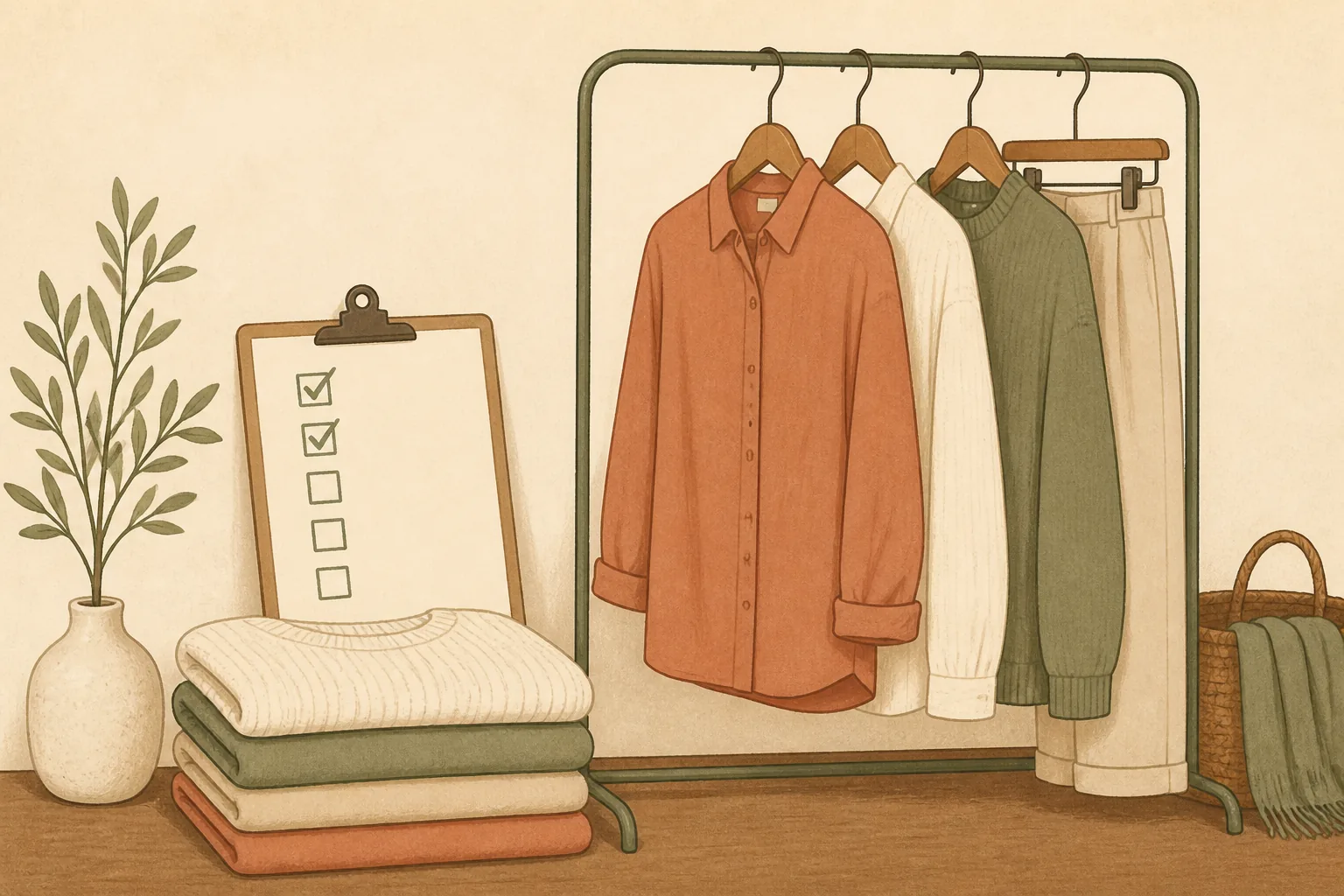
The best Black Friday purchase is one you decided on before you saw the price. Spend ten minutes with your closet this week and write down two kinds of item:
- Real gaps. Pieces whose absence stopped an outfit in the last month. Not "it would be nice to have a camel coat", but "I had nothing warm to wear over a dress on Tuesday".
- Worn out favourites. The jeans with the thin knee, the boots that let water in, the jumper that has pilled past saving. You already know you wear these, so replacing them is the safest buy there is.
Anything that is not on the list has to pass the test below before it gets near the checkout.
The five minute test
Run these in order. If a piece fails one, you can stop there.
1. Would I buy it at full price?
Cover the sale price with your thumb. If the honest answer is no, the discount is doing all the work, and you are about to pay for a feeling rather than a garment. The only exception is something on your list that was out of budget at full price.
2. Does it work with three things I already own?
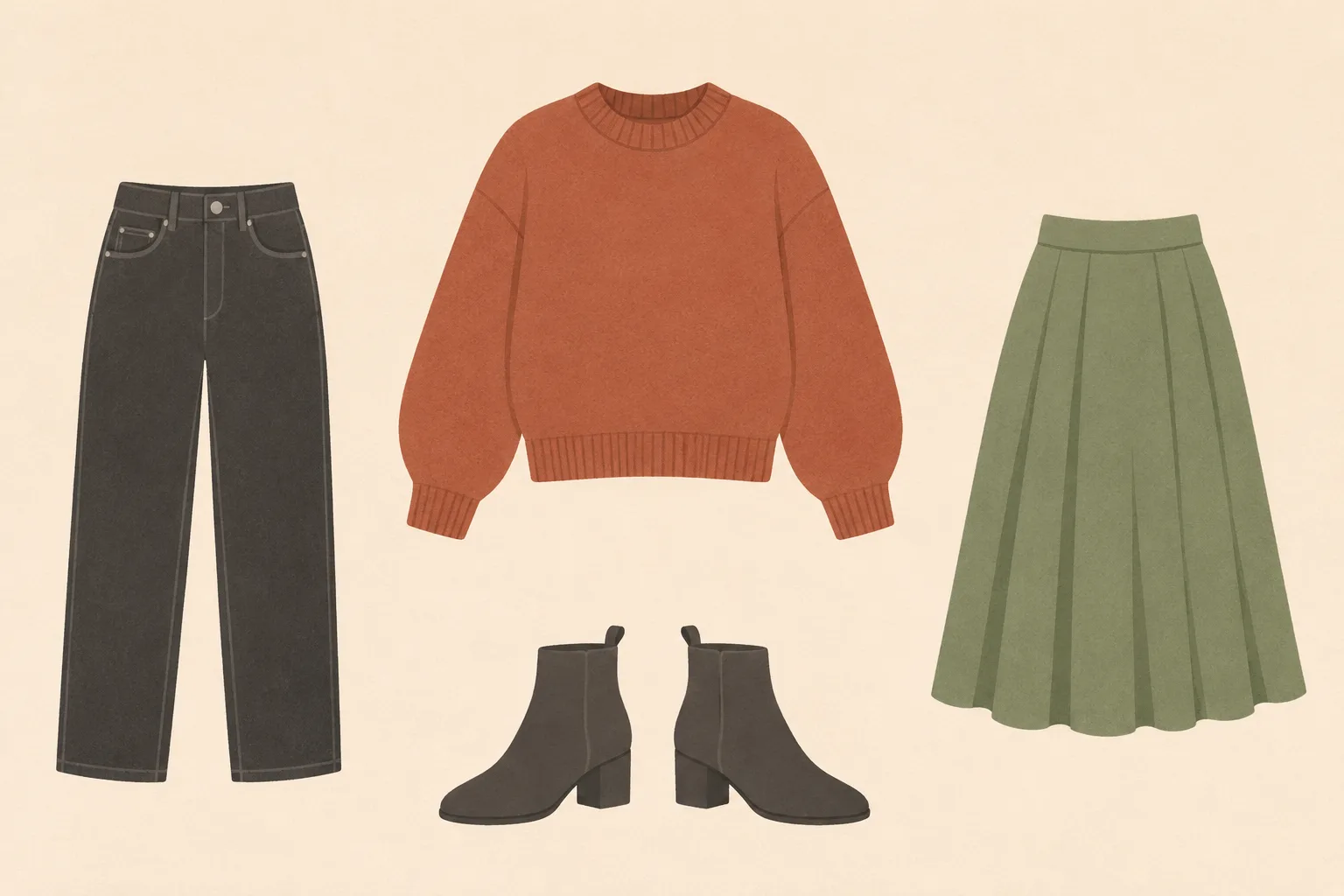
Name three specific pieces in your closet you would wear it with, today, without buying anything else. Not "some trousers", but "my dark jeans, the grey wide leg trousers and the black midi skirt". If you cannot get to three, you are looking at an orphan: a piece that needs a new outfit built around it. Orphans are one of the main reasons people feel they have nothing to wear in a full closet.
3. What will it cost per wear?
Divide the sale price by the number of times you will realistically wear it. A €60 jumper reduced to €36 needs 18 wears to reach €2 per wear. If it is something you will reach for twice a week all winter, that is an easy yes. If it is a party piece for the two parties you go to each December, it will take years. Our cost per wear guide has the full break even test, and it works just as well on a sale price.
4. What does it replace?
A new piece either fills a gap from your list or takes the place of something you will let go. If it does neither, it is an addition, and additions are how wardrobes slowly fill up with clothes that never get worn. If you are unsure how much is enough, how many clothes do you actually need gives realistic numbers by category.
5. Can I return it, and will I actually do it?
Check the return policy before you pay. Some sale items are final sale and some retailers charge for returns. Then be honest: if you usually keep things you meant to send back, treat every purchase as final.
What is actually worth buying on Black Friday
The deals that pass the test tend to fall into a few groups:
- Replacements for things you wear constantly. The same jeans, the same trainers, the same plain knit. You know the size and you know the wear count.
- Well made basics in a fit you already trust. Merino layers, good socks, plain T-shirts. Low risk and high wear.
- The expensive staple you have wanted for months. A coat or boots that clears the cost per wear bar in one winter, and that was on your list long before the email arrived.
The ones that usually fail are trend pieces, occasion wear without an occasion, and anything bought mostly because the bundle made the third item free.
When it arrives: the 48 hour try on
Do not cut the tags off yet. Within two days, try the new piece on at home with the three items you named in question 2, and build at least two complete outfits. Do it in normal daylight with the shoes you would actually wear.
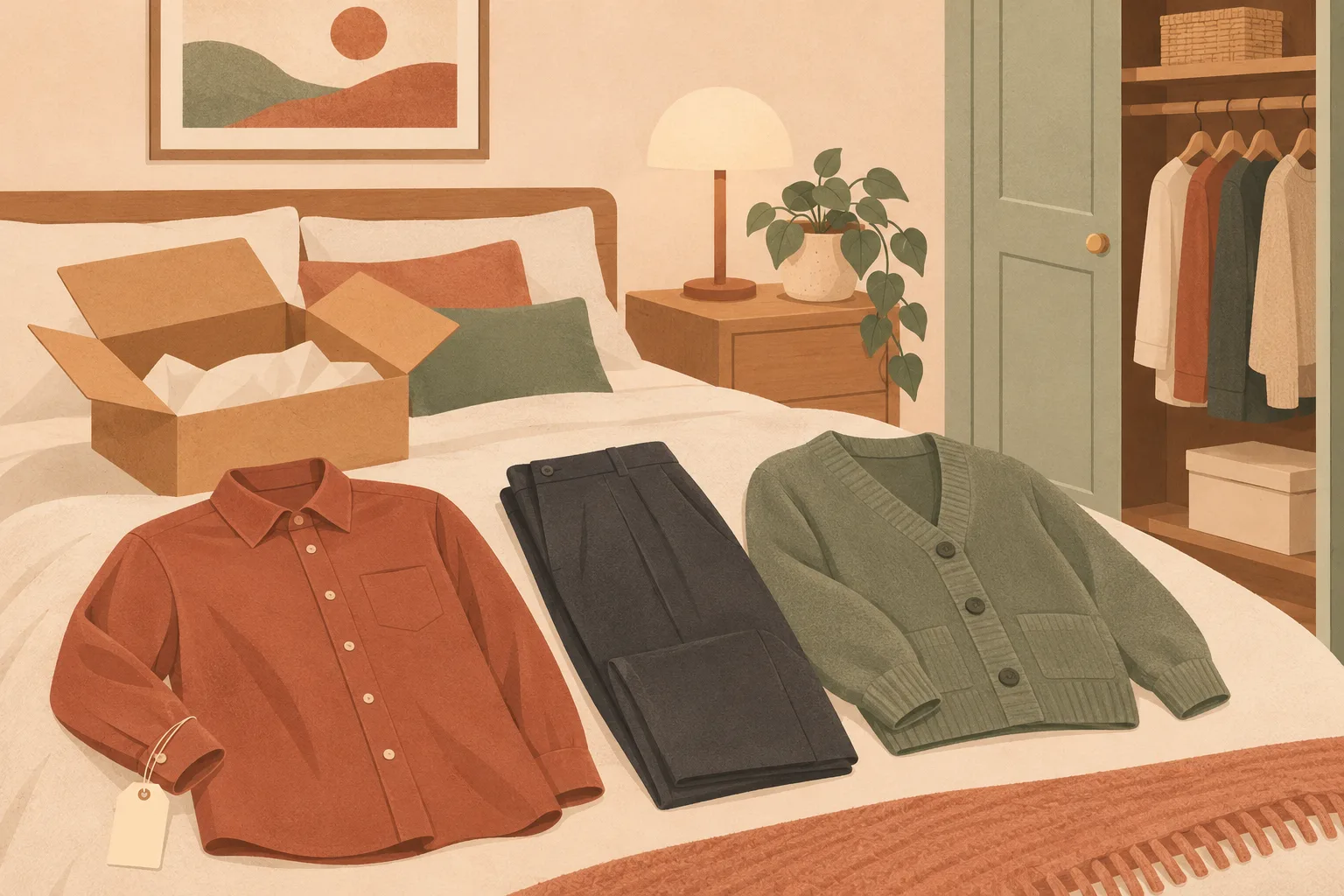
If you cannot make those two outfits, or you catch yourself thinking "it will work once I buy a new pair of trousers", send it back. A return is not a failure. It is the test doing its job.
Let your closet do the checking
The hardest part of the test is remembering what you own and how often you really wear it. Everyone overestimates how often they wear the clothes they like owning.
Closet DJ keeps that answer in your pocket. Wear tracking shows which pieces you actually reach for, so the gaps on your list are real gaps rather than hunches. The outfit generator builds looks from what you already own, which makes question 2 a quick check instead of a memory test. And you can describe a piece to the Style Assistant and ask what in your closet it would go with before you buy it. Add what you paid for each item and cost per wear becomes a number you can look up. If you would rather shop less overall, the capsule wardrobe checklist is a good place to start.
Frequently asked questions
Are Black Friday clothing deals actually worth it?
They can be, especially for replacing pieces you already wear constantly or buying a staple you had planned for. The value disappears when the discount is the main reason for buying. A cheap piece you never wear costs more per wear than a full price piece you wear every week.
How do you avoid impulse buying clothes on Black Friday?
Write a short list of real gaps and worn out favourites before the sales start, and run anything not on that list through a few quick questions: would you buy it at full price, does it go with three things you own, and what will it cost per wear. Leaving items in your basket overnight before checking out also helps.
What clothes should you buy on Black Friday?
The safest buys are replacements for things you wear all the time, well made basics in a size and fit you already trust, and a planned staple such as a coat or boots that you will wear often enough to justify the price. Trend pieces and occasion wear without a specific occasion are the most likely to go unworn.
What is the 30 wears rule?
It is a simple shopping check: before you buy something, ask whether you will wear it at least 30 times. It works well alongside cost per wear, because 30 wears turns even a pricier piece into good value, while a bargain you wear twice stays expensive.
Shopping the sales this year? Closet DJ shows what you already own and what you actually wear, so every deal gets checked against your real closet. Try it free.
Put this guide to work
Now try it on your own closet.
Closet DJ is free to start. Add your clothes and the Style Assistant answers with pieces you actually own.
Get new posts in your inbox
One email per new post, written by the Closet DJ team. No spam, unsubscribe anytime.