The everyday base
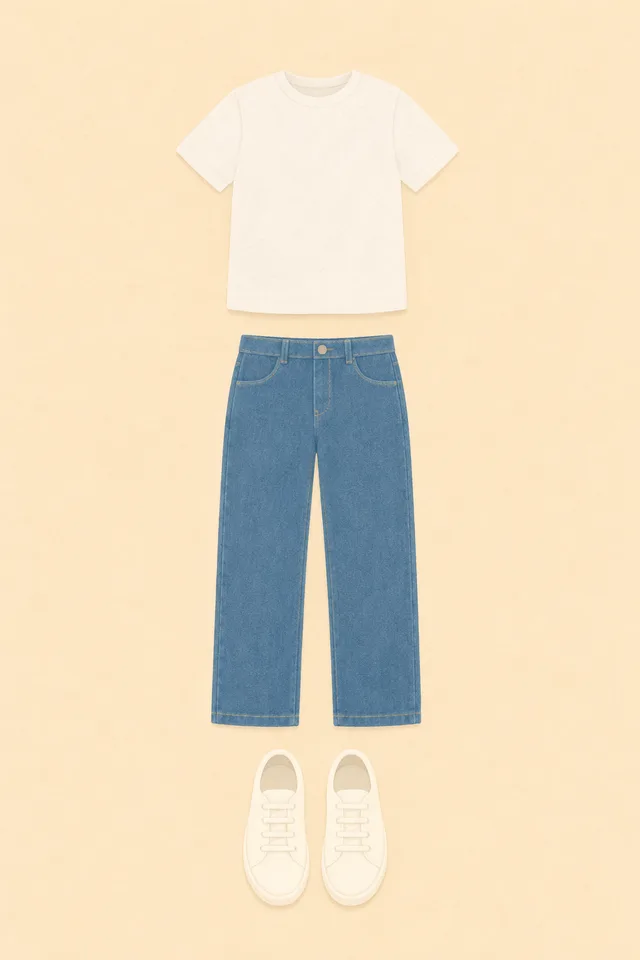
White tee, straight-leg jeans, white trainers
Capsule Wardrobe
A capsule wardrobe is a small set of clothes that all work together. Most guides start by telling you what to buy. This one starts with your actual closet, because you probably own most of it already.
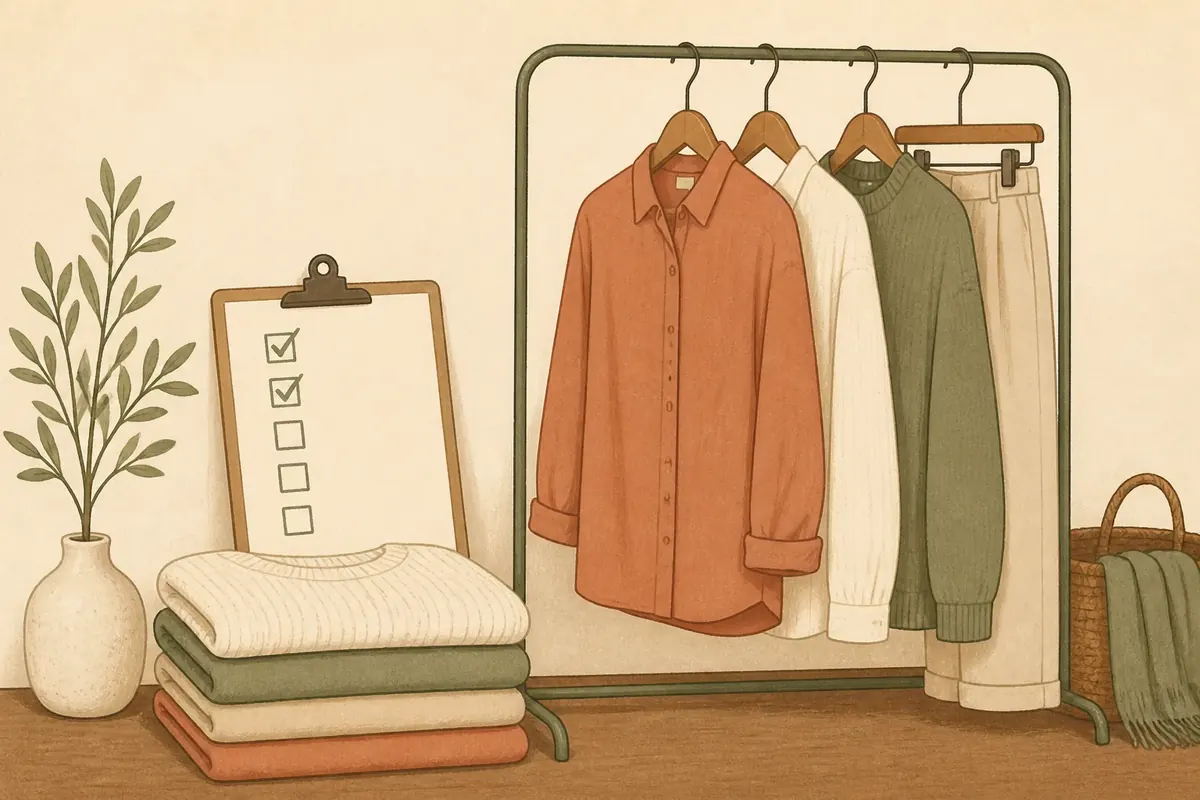
A capsule wardrobe is a deliberately small set of clothes chosen so that almost any top works with almost any bottom. The point is not owning less for its own sake. The point is that a smaller, better-matched set produces more outfits than a larger mismatched one, and removes the daily decision of what to wear.
When your neutrals agree, any top goes with any bottom. Thirty pieces that clash give you fewer real outfits than twelve that do not.
A capsule has no single-use items waiting for an occasion that rarely comes. Each piece appears in several different looks.
You are choosing between combinations you already know work, rather than searching a full rail every morning.
There is no magic number. Most workable capsules land somewhere between 25 and 40 pieces per season, excluding underwear, gym kit and true occasion wear. Structure matters more than the count: cover these slots and the combinations take care of themselves.
Counting is the least important part. A capsule that covers every slot at 24 pieces beats one that owns nine jumpers and no trousers at 40.
Nearly every capsule wardrobe guide is a list of things to buy. That is backwards, and expensive. You almost certainly already own a workable capsule; the problem is that it is mixed in with everything else, so you cannot see it.
Lay out the clothes you actually reach for. Seeing them together, away from the wardrobe, is what makes the overlaps and the gaps obvious.
Two or three neutrals will already dominate. That is your base, chosen for you by what you have kept wearing. Build around it rather than fighting it.
Work through the slots above. For each one, keep the version that combines with the greatest number of things you own, not the one you like most in isolation.
Whatever slot is genuinely empty after that is a real gap, and it is usually one or two items rather than a whole new wardrobe.

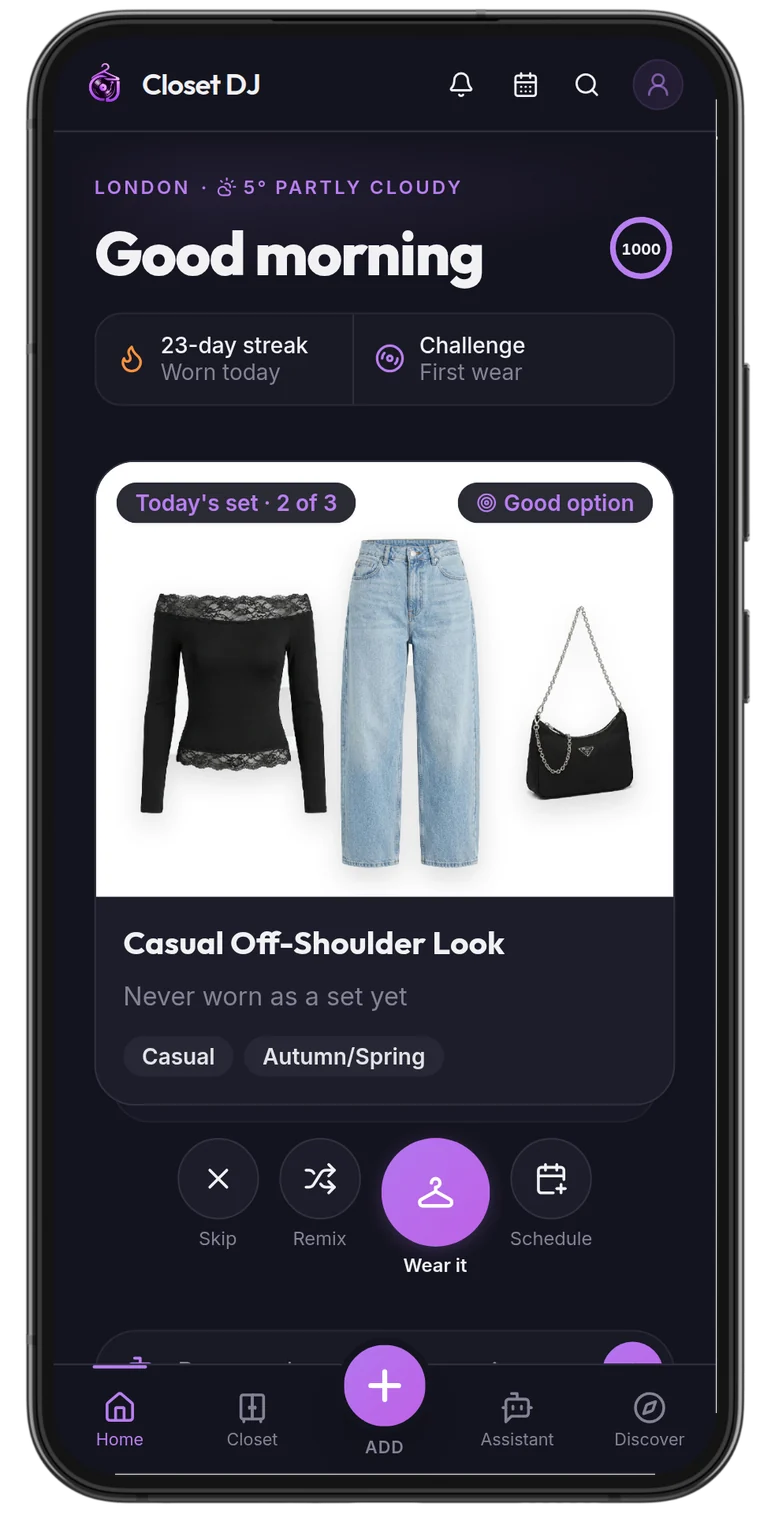
Closet DJ catalogues your clothes from photos, then builds outfits from the pieces you actually own. That makes the overlap visible: you can see which items keep turning up in combinations that work, which is exactly the set a capsule should be built from.
These are the combinations a well-chosen capsule keeps producing. Once the base agrees, you are swapping one layer rather than rebuilding an outfit.
White tee, straight-leg jeans, white trainers
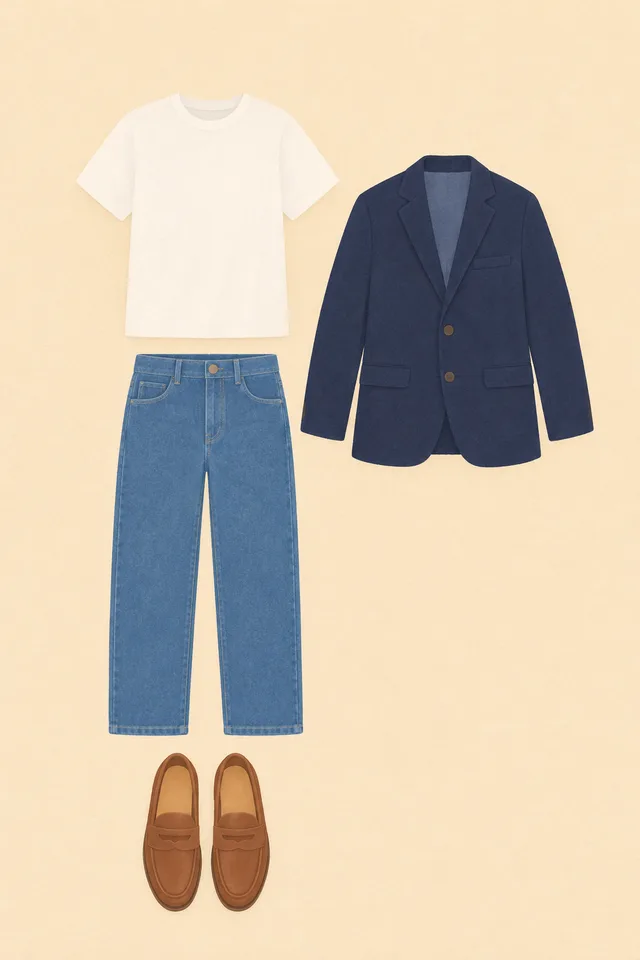
White tee, straight-leg jeans, blazer, loafers
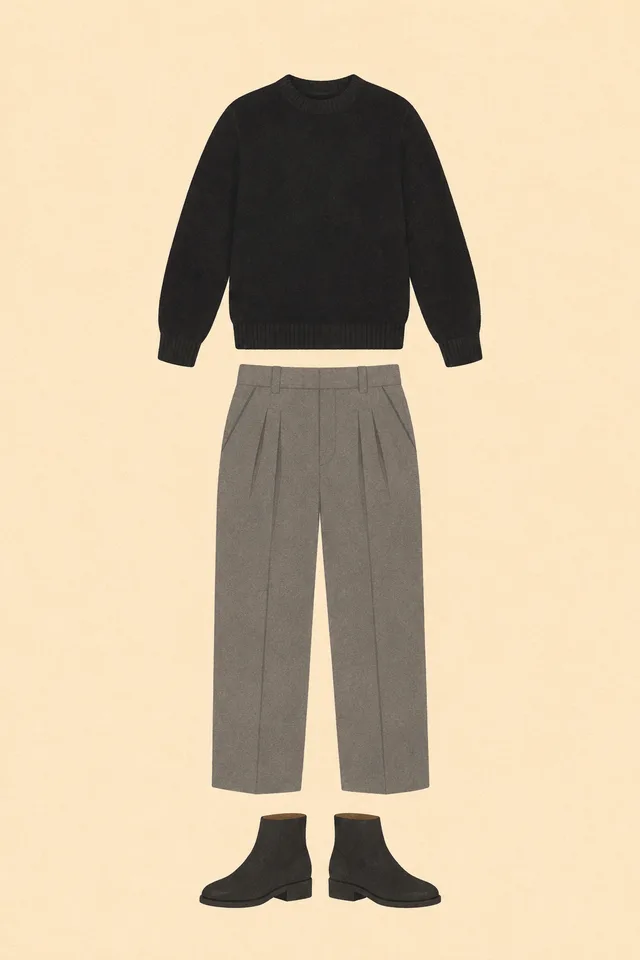
Black fine-knit, tailored trousers, ankle boots
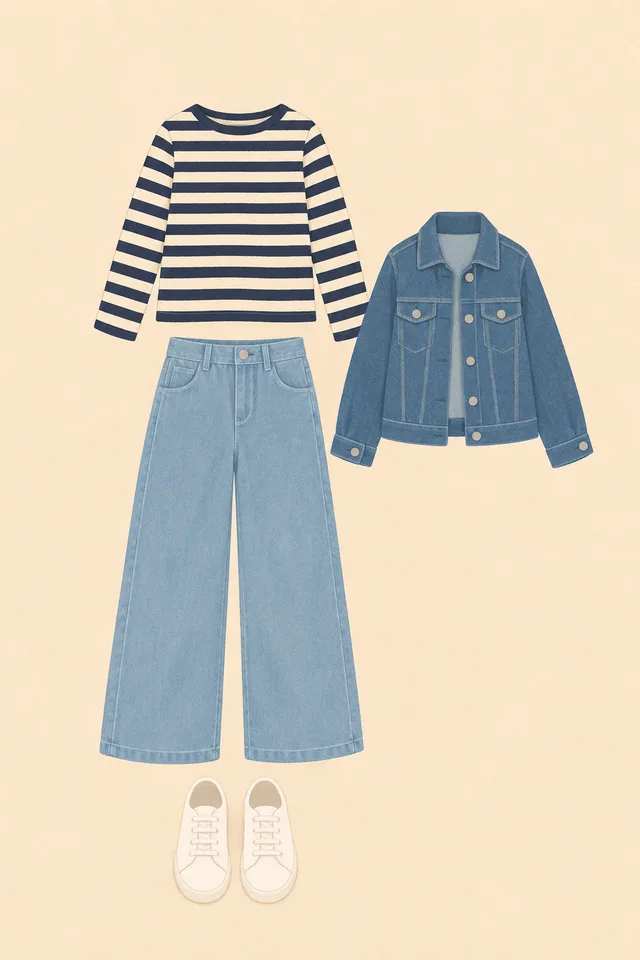
Striped long-sleeve, relaxed jeans, denim jacket, trainers
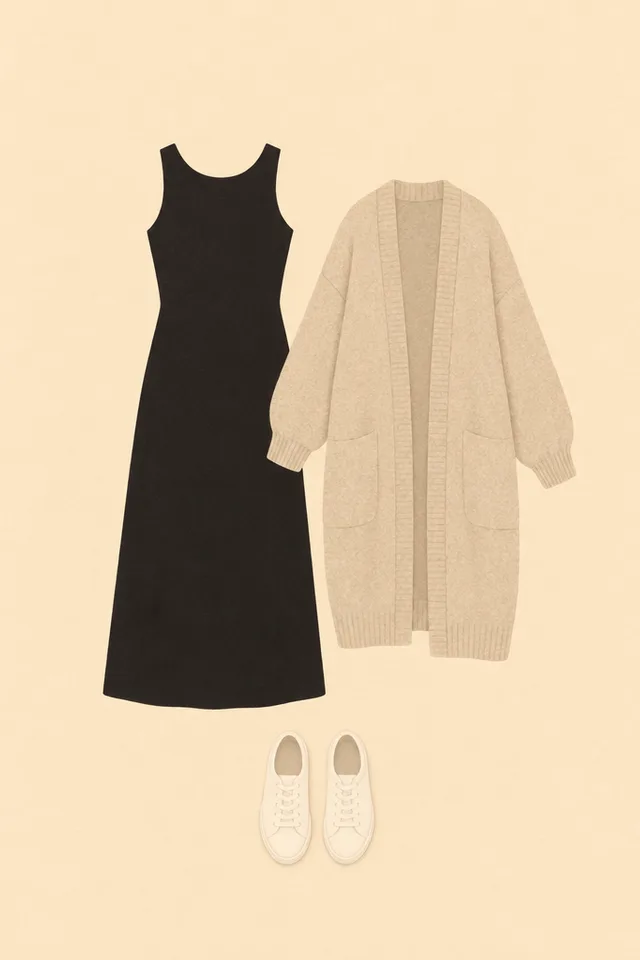
Simple dress, trainers, oversized cardigan
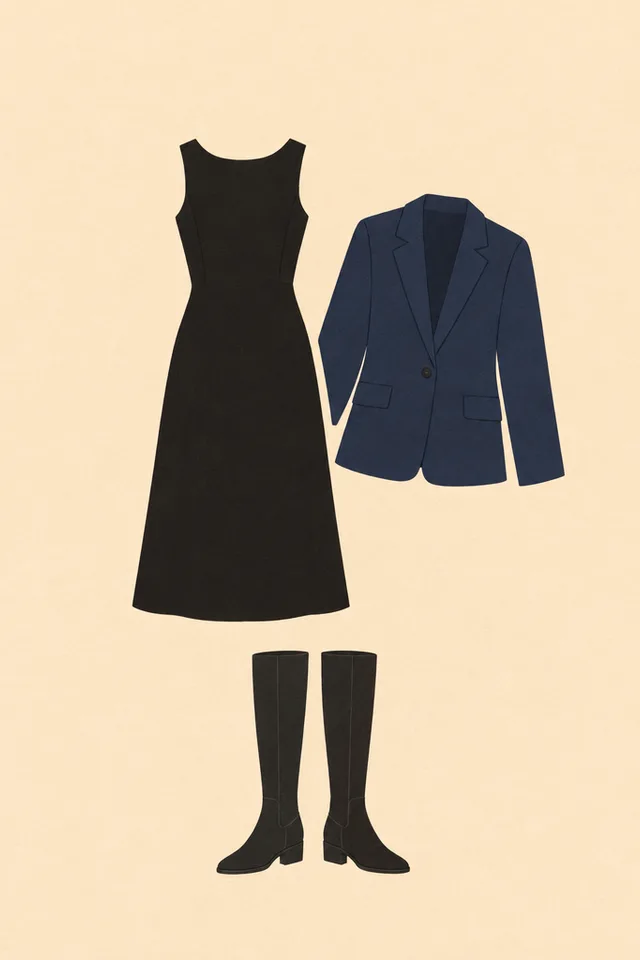
Simple dress, blazer, boots
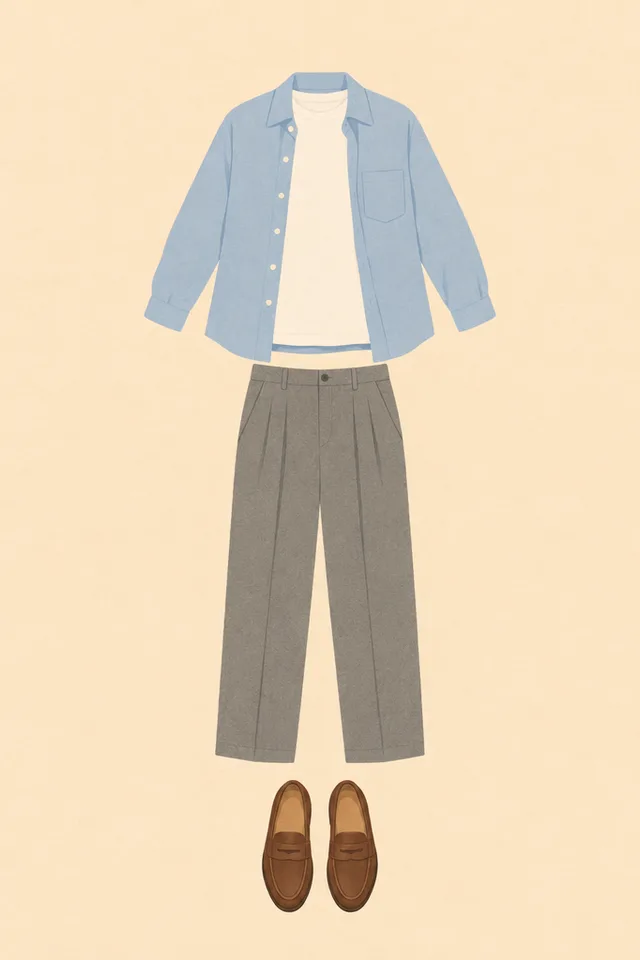
Open shirt over a tee, tailored trousers, loafers
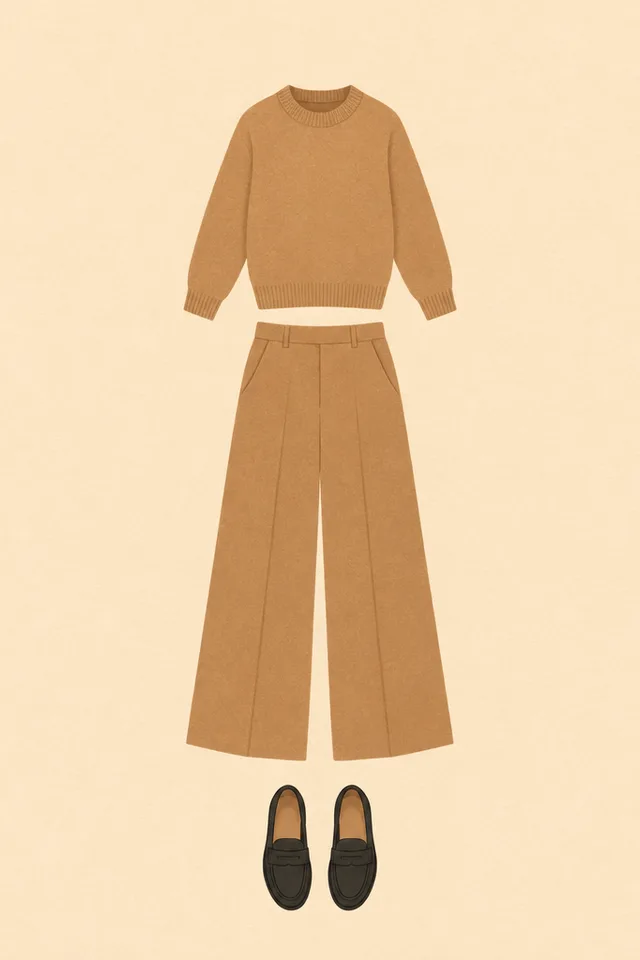
Knit and trousers in the same neutral, contrast shoes
A capsule is per season, not forever. Most of the base carries across; you are swapping the outer layer and two or three pieces.
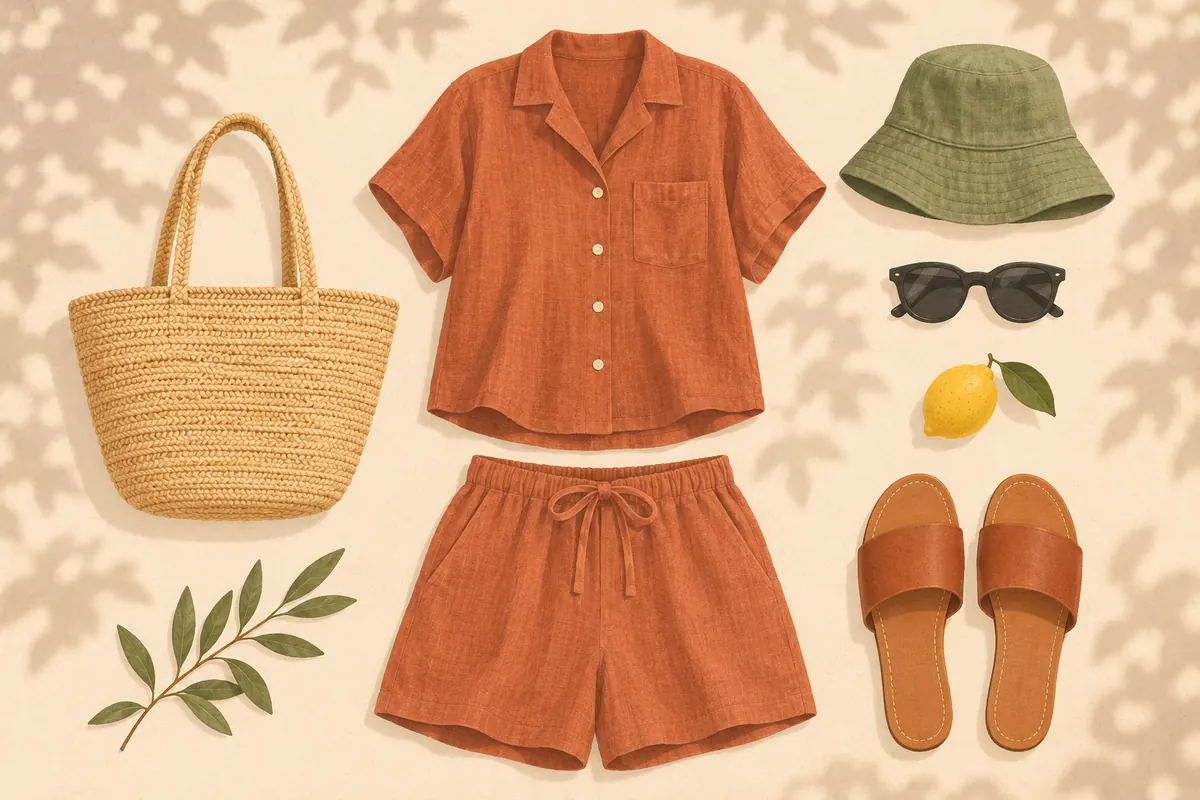
Lighter fabrics, the same neutral base. Linen shirts, a couple of dresses, sandals alongside the trainers. The blazer stays, in a lighter weight.
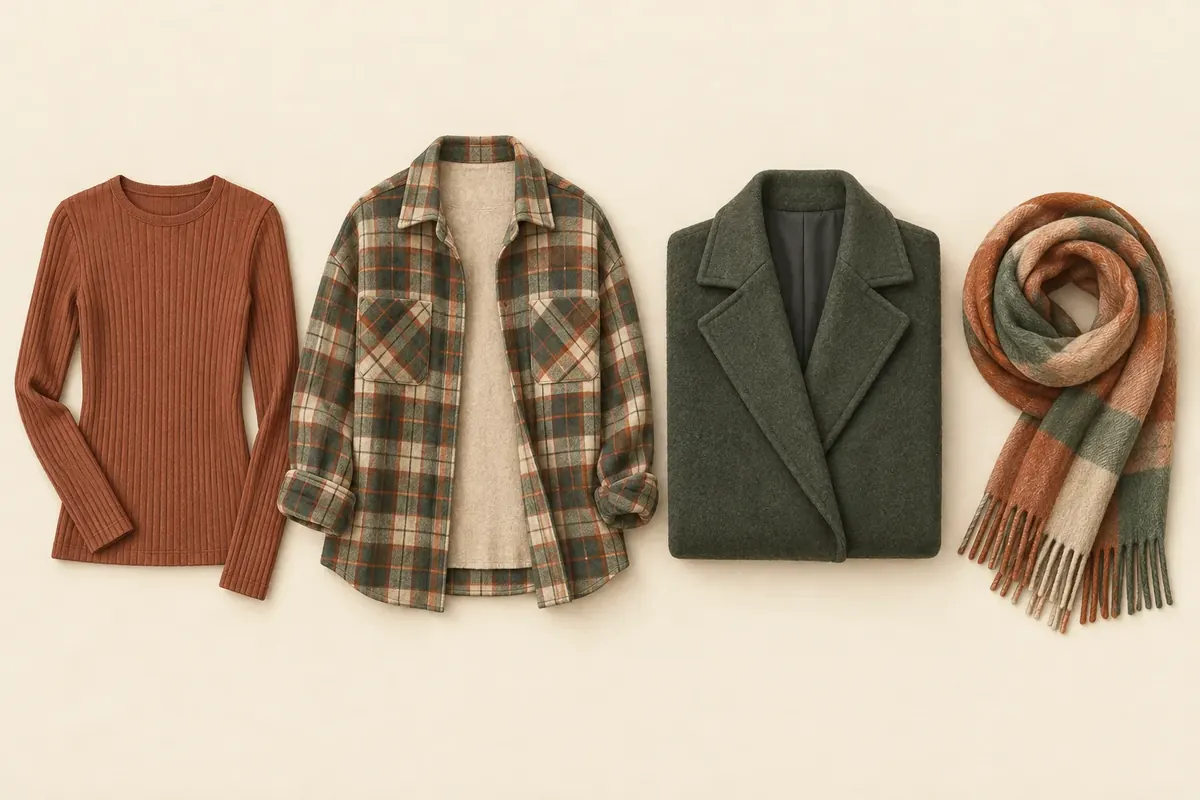
Add real warmth rather than more layers of the same thing: one good coat, heavier knits, boots. Keep the trousers and shirts, wear them under more.

Spring and autumn are where a capsule proves itself. The base does not change at all; the jacket, the knit weight and the shoes do.
Replacing your wardrobe to simplify your wardrobe is the most common mistake, and the most expensive one. Build from what you own and buy only the proven gaps.
A capsule reflects a climate and a life. A list built for an office in a cold city is wrong for someone working from home somewhere warm.
Cutting to a number you read somewhere leaves you doing laundry constantly and wearing the same three things. The set should be small enough to match and large enough to live in.
If it combines with nothing, it is not part of the capsule. That does not mean throwing it out, only that it lives outside the working set.
Start free
Add your clothes once and Closet DJ builds outfits from them, so the pieces that combine with everything become obvious. Free to start.