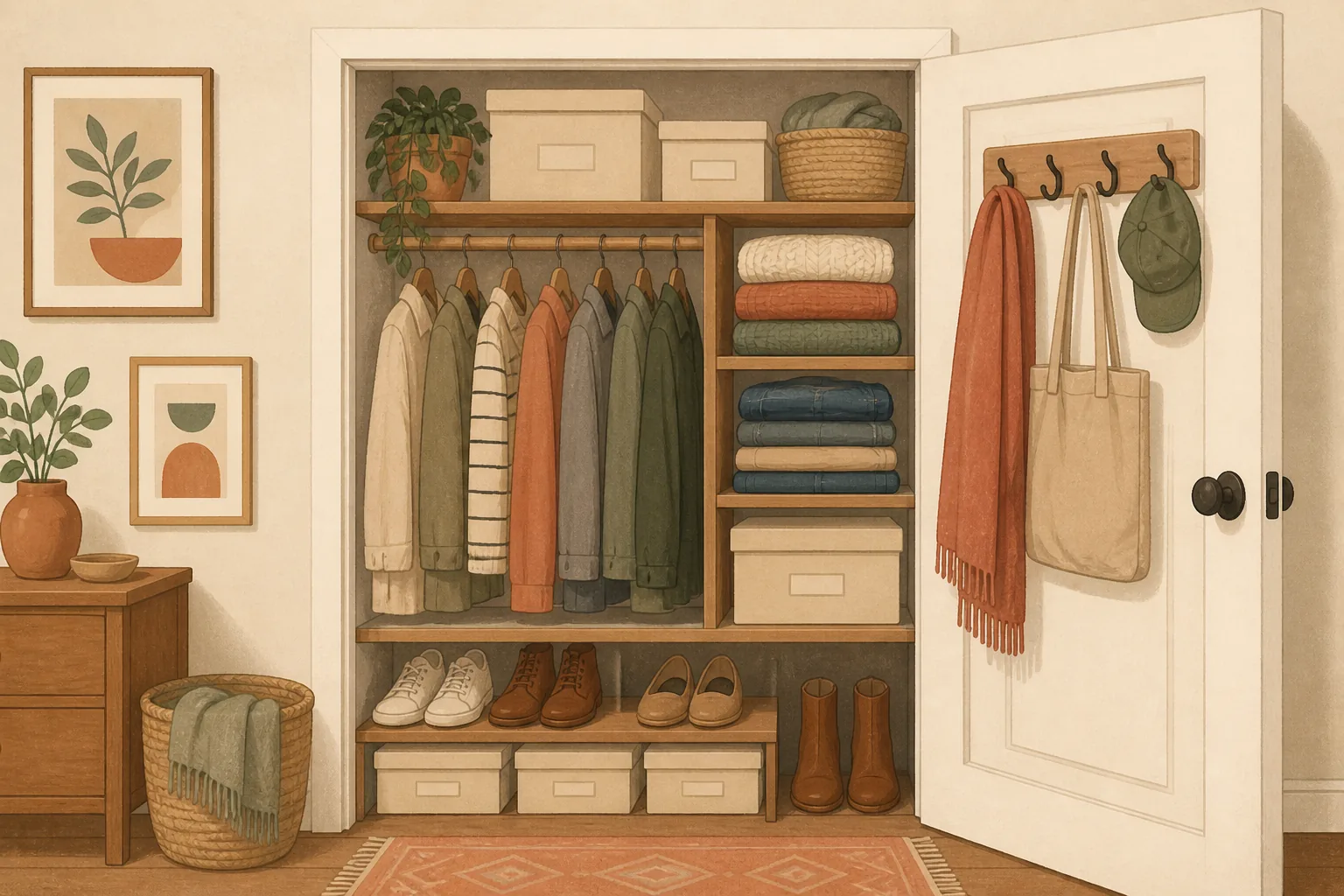
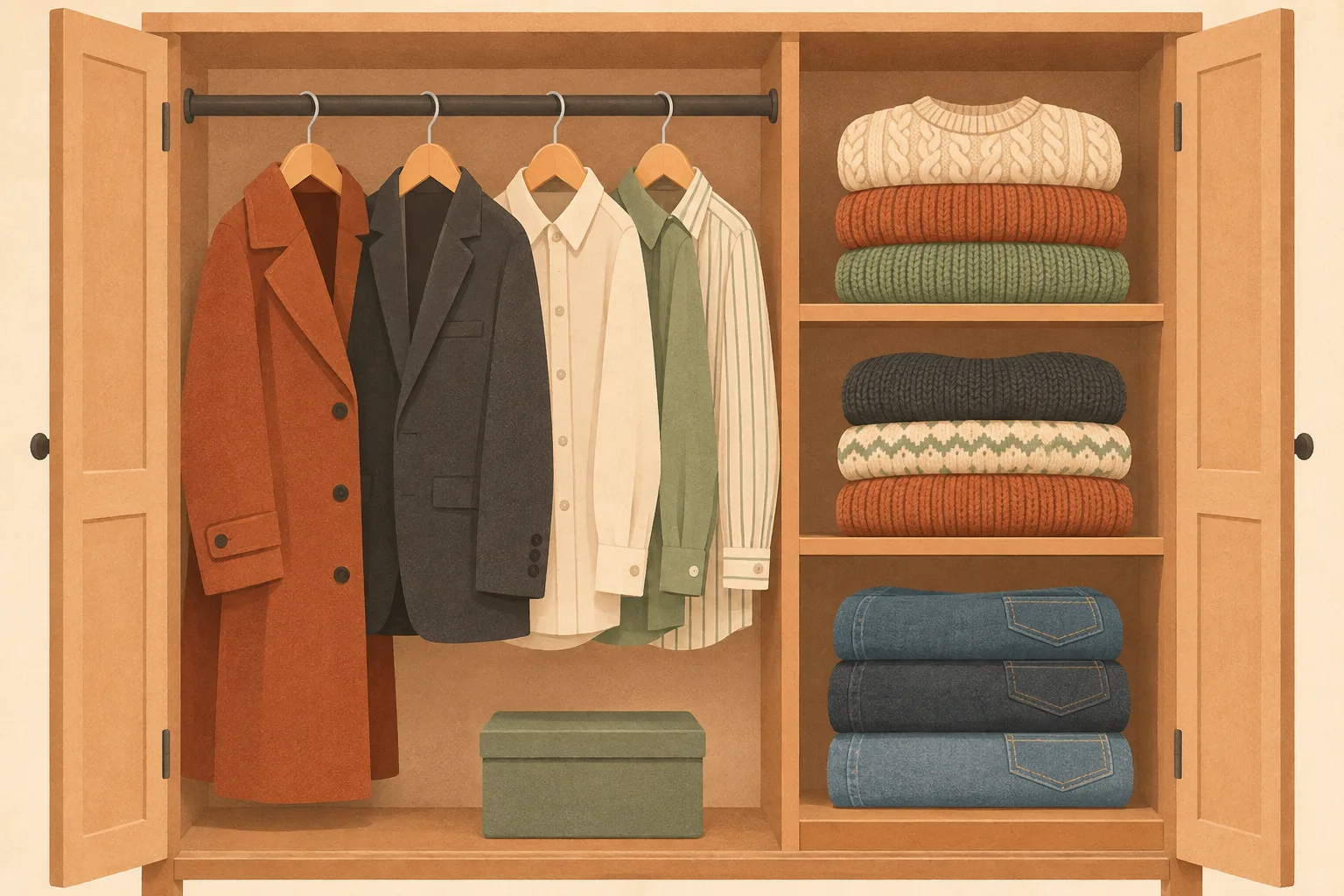
Most wardrobes are arranged by accident. Whatever fitted on the rail got hung, whatever did not got folded, and the overflow went into a bag at the bottom. That works until a favourite jumper comes off its hanger with two pointed bumps on the shoulders, or a linen shirt needs ironing every single time you want to wear it.
Choosing between hanging and folding is not a matter of taste. There is one simple rule behind it, and once you know it, every garment in your closet has an obvious home.
The one rule: weight and structure
Ask two questions about any piece of clothing.
Is it heavy and stretchy? Then fold it. Gravity is the enemy of knits and jersey. Hung up for weeks, a heavy knit slowly pulls itself longer, and the hanger presses into the shoulders until the shape sets.
Is it structured or does it crease easily? Then hang it. Tailoring, collared shirts, dresses and anything in silk, linen or rayon keep their shape and stay smooth on a hanger, and pick up sharp creases in a pile.
Here is the garment by garment answer.
What to hang
- Coats and jackets. Always hang, on a wide, shaped hanger that fills the shoulders. A thin wire hanger lets the shoulders collapse and the collar roll.
- Blazers and suit jackets. Same as coats: a broad wooden hanger, buttoned once so the front hangs straight.
- Shirts and blouses. Hang anything with a collar, and anything woven that creases (cotton poplin, linen, silk). Do up the top button so the collar keeps its line.
- Dresses and skirts. Hang woven dresses by the shoulders and skirts by their waistband on clip hangers. Very long dresses can be folded once over the hanger bar so the hem does not drag on the floor of the closet.
- Tailored trousers. Hang them by the hem from a clip hanger, or folded along the crease over a bar. They will drop out any light creases overnight.
What to fold
- Jumpers and cardigans. Fold all knitwear, especially wool, cashmere and chunky knits. This is the single biggest storage mistake we see.
- T-shirts and jersey tops. Jersey stretches at the neck and shoulders on a hanger. Folding keeps it in shape and takes a fraction of the rail space.
- Jeans and casual trousers. Denim and chinos are sturdy enough to fold without creasing badly, and a stack of folded jeans is far easier to scan than a rail of them.
- Sportswear and loungewear. Leggings, joggers, hoodies and gym tops all stretch, so fold them.
- Underwear, socks and swimwear. Drawers, always, ideally in small dividers so they do not migrate.
The knitwear compromise
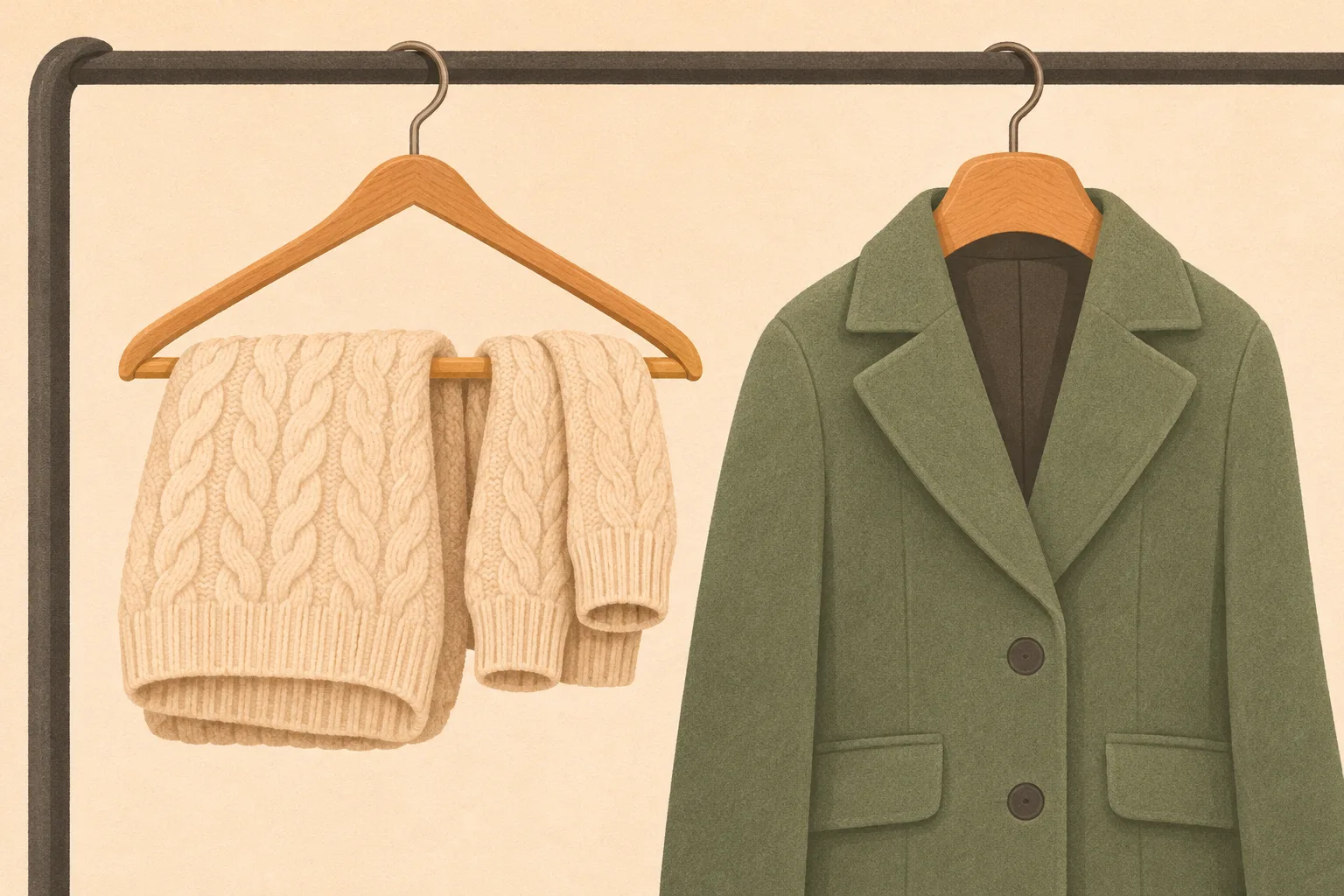
If you have no drawer or shelf space left, there is a safe way to hang a jumper. Lay it flat, fold it in half lengthways so the sleeves line up, then put the hanger hook in the armpit. Fold the body over one side of the hanger and the sleeves over the other. The weight now rests on the bar instead of the shoulders, so nothing stretches.
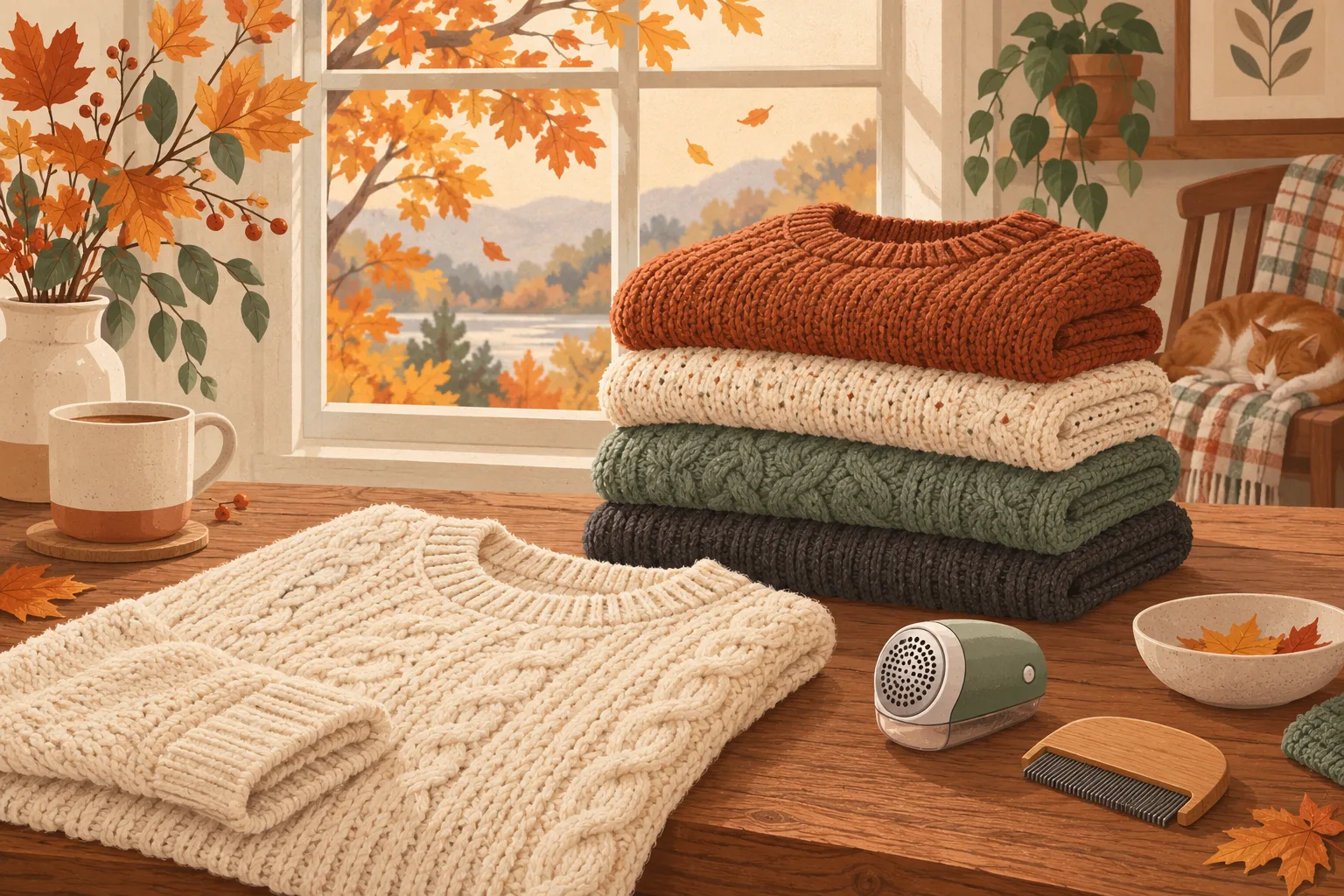
It is also worth knowing that how you store knits affects how quickly they wear. A jumper squashed under a heavy pile, or rubbing against other clothes on a crowded rail, pills faster. Our guide to stopping jumpers pilling covers the rest of the routine.
How to fold so you can actually see everything
The usual way to fold, flat and stacked, has a flaw: you can only see the top item. Pull one from the middle and the whole pile topples, so you end up wearing whatever is on top.
The fix is to fold for a drawer the way you would file papers in a cabinet.
- Fold into a neat rectangle. Lay the top flat, fold the sides and sleeves in to make a long strip, then fold it in half or thirds from the bottom.
- Make it stand up. The finished rectangle should be firm enough to stand on its edge. If it flops, fold it once more.
- File it, do not stack it. Line the folded pieces up in the drawer side by side, front to back, so every item shows its edge.
- Group by type, then by colour. All the T-shirts together, light to dark. You will see at a glance what you have and what is in the wash.
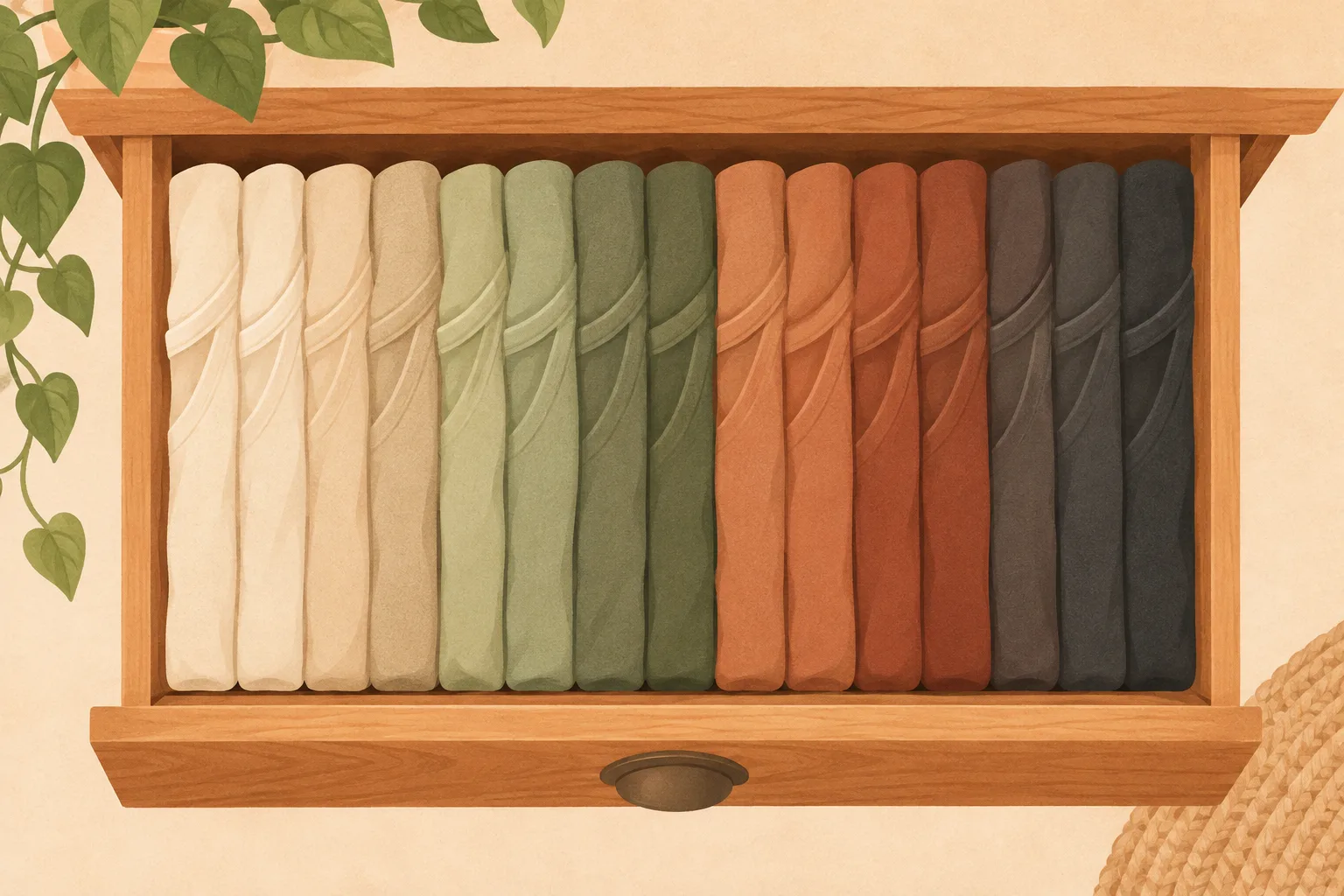
On open shelves, keep stacks short (four or five knits at most) and use shelf dividers so they do not lean. In a small closet, filing in drawers is often what frees up enough rail for the clothes that genuinely need hanging.
Getting hangers right
You do not need expensive hangers, just the right one for the job: wide wooden or shaped hangers for coats and blazers, slim velvet ones for shirts and dresses (they save space and stop silky fabrics sliding off), and clip hangers for skirts and trousers. Skip wire hangers, which bend and mark the shoulders. Leave a finger's width between hangers too, because a packed rail crushes clothes into creases.
What goes in a box for the season
Anything you will not wear for the next three or four months should come out of the daily closet altogether. That is usually summer dresses, shorts and linen in winter, and heavy coats and thick knits in summer. Out of season storage has its own rules:
- Wash everything first. Body oils and food traces you cannot see are what moths and stains feed on during months in a box.
- Choose breathable storage. Cotton or canvas boxes and garment bags let fabric breathe. Plastic traps damp and can yellow light colours.
- Fold, do not hang, long term. Even clothes you would normally hang are safer folded loosely in a box for a season, with tissue paper in the folds of anything delicate.
- Add cedar or lavender to keep moths away from wool, and keep the boxes somewhere cool and dry, not in a damp loft or garage.
- Never vacuum pack wool or down for months. It flattens the loft, and it does not always come back.
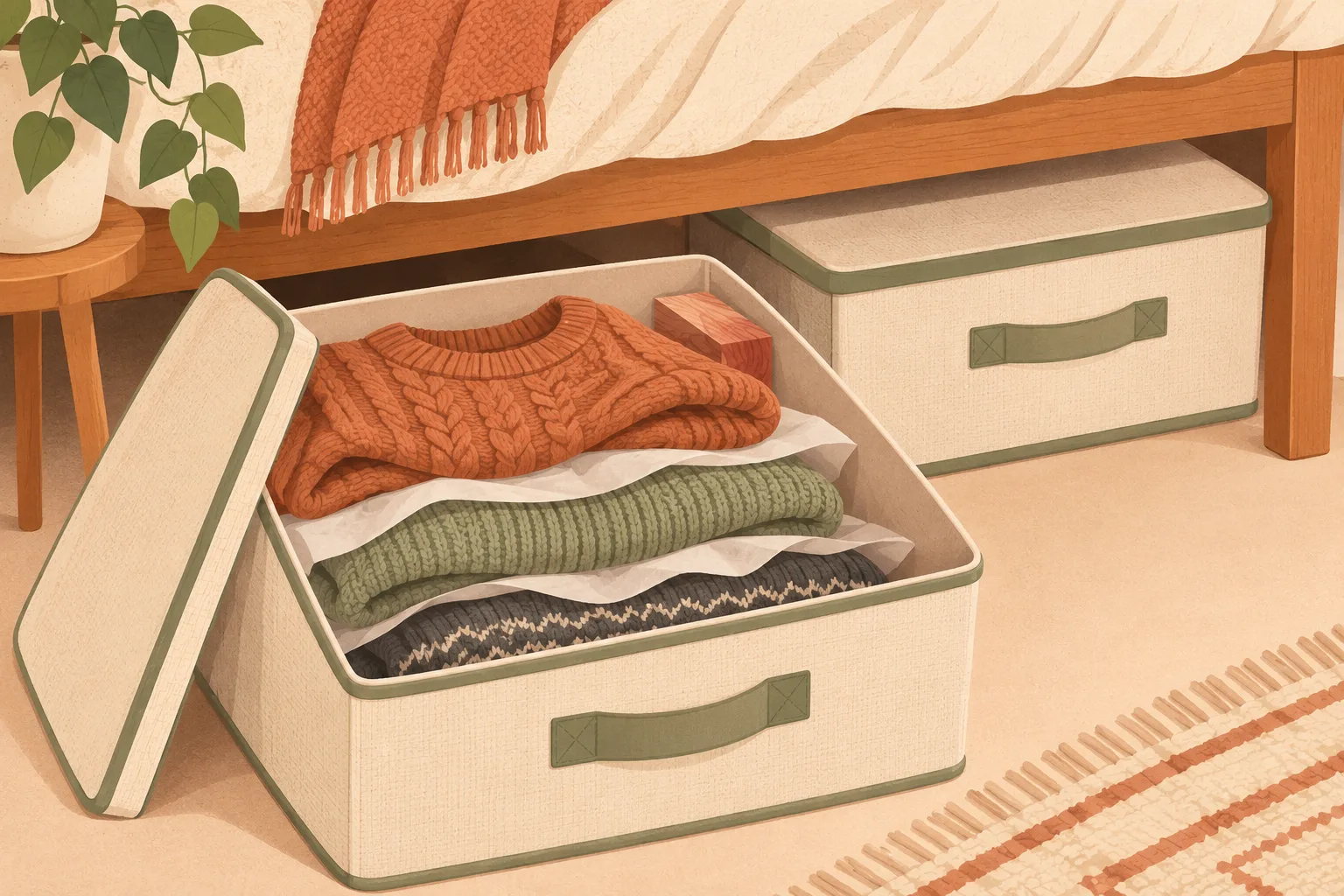
The full process for packing one season away and bringing the next one out is in our seasonal wardrobe switch guide.
Out of sight, out of mind
There is one downside to good folding and boxing: you forget what you own. Folded clothes at the bottom of a drawer and boxes under the bed do not get worn, and in spring you rediscover a jumper you would have loved in January.
That is where a digital wardrobe helps. With Closet DJ every piece is in the app whether it is on the rail, in a drawer or in a storage box, so it still turns up in outfit suggestions. Wear tracking shows which pieces you have not touched in months, which is a good prompt to check whether something is forgotten or simply not earning its space.
Frequently asked questions
Should you hang or fold sweaters?
Fold them. Hanging a jumper for weeks lets its own weight stretch it and leaves hanger bumps in the shoulders. If you must hang one, drape it over the bar of the hanger rather than hanging it by the shoulders.
Is it better to hang or fold jeans?
Either works, because denim is sturdy. Folding saves space and makes jeans easier to see in a stack or drawer. Hang them by the waistband or hem on a clip hanger if you have plenty of rail space.
Should T-shirts be hung or folded?
Folded, ideally filed upright in a drawer. Jersey stretches at the neck and shoulders on a hanger. Smart cotton tops you would iron can be hung on slim velvet hangers.
How should I store clothes for winter or summer?
Wash everything first, fold it loosely into breathable cotton or canvas boxes with cedar to deter moths, and keep the boxes somewhere cool and dry. Avoid plastic bins and long term vacuum packing for wool and down.
Keep every piece in view, even the ones in storage. Closet DJ catalogues your wardrobe from photos and plans outfits from everything you own. Try it free.
Put this guide to work
Now try it on your own closet.
Closet DJ is free to start. Add your clothes and the Style Assistant answers with pieces you actually own.
Get new posts in your inbox
One email per new post, written by the Closet DJ team. No spam, unsubscribe anytime.