How to Layer Clothes for Autumn Without Looking Bulky
Autumn is where getting dressed stops being simple. It is 12 degrees when you leave and 22 by mid afternoon, so one warm thing is never the answer. Layers are, and layers are where most people lose the plot: warm enough, but padded, shapeless, somehow three sizes wider than they started.
Bulk is not the price of being warm. It comes from three specific mistakes, and once you can name them you can dress around them.
Why layers look bulky
Everything is the same weight. Two mid weight knits and a padded jacket is three garments fighting for one job. Nothing sits close, nothing gives, and the total is thicker than any single layer needed to be.
The volume lands in one place. A hoodie under a coat puts four thicknesses across your shoulders and chest and none anywhere else. Your eye reads the widest point, not the average.
Nothing tapers. An oversized top over wide trousers under a long coat gives the outline no edges at all. Warmth is fine. The silhouette is a rectangle.
All three are about arrangement, not quantity. Five thin layers can look sharper than two thick ones.
The three jobs, not the three garments
Outdoor brands describe layering as base, mid and outer. That is still the right model, as long as you read it as three jobs rather than three specific items.
- The base moves moisture and sits closest. Thin, smooth, slightly fitted: a fine merino long sleeve, a good cotton tee, a silk or jersey top. It decides whether everything above slides or snags, so smooth beats textured every time.
- The mid traps air. This is your warmth, and it does not need to be thick. Air does the insulating, so a fine gauge lambswool jumper beats a heavy acrylic one at the same visual bulk. Flannel overshirts, cardigans and light gilets all live here.
- The outer blocks wind and rain. Wind stripping warm air out of your mid layer is what actually makes you cold at 12 degrees. A trench, a wool coat or a light shell handles it without any padding.
On a mild day you often need only two of the three. A base plus a proper coat is warmer than people expect, because the coat is stopping the wind.
Thin to thick, tight to loose, short to long
Order everything outwards on all three axes at once. Each layer should be a little thicker, a little roomier and a little longer than the one under it.
Thickness and room outwards keep the close fitting things from bunching and give each layer space to sit over the last without compressing it, which is where the warmth actually lives. A jumper squashed flat inside a tight jacket has lost most of its insulation.
Length outwards does the visible work. Let each hem show by roughly 5 to 10 centimetres: base below the jumper, jumper below the jacket, jacket well above the coat. Those steps read as deliberate layering rather than accidental padding, and they break a solid block into lines that make you look longer instead of wider.
Proportion beats everything else
Here is the rule that fixes more outfits than any other: one volume per outfit, and the rest tapers.
If the top half is generous (an oversized cardigan, a boxy overshirt, a big coat), the bottom half is slim or straight. If you are wearing wide leg trousers, the top half stays close: a fine knit, a fitted base, a coat with a defined shoulder. Wide over wide is the single fastest way to look bulky no matter how good the fabrics are.
Three small moves buy back a lot of shape:
- Show a waist somewhere. A tucked base layer, a belted coat, or a long cardigan left open so it draws two vertical lines down your front.
- Keep the ankle and wrist visible. Push sleeves up, wear a cropped or straight trouser. Bulk that ends in a visible ankle reads as styled. Bulk that swallows your hands and feet reads as a duvet.
- Put the open layer outside. An unbuttoned shirt over a tee gives you a vertical break. Buttoned up, the same shirt is a slab.
Fabric does the quiet work
Two outfits with identical layer counts can look completely different, and it is usually fabric.
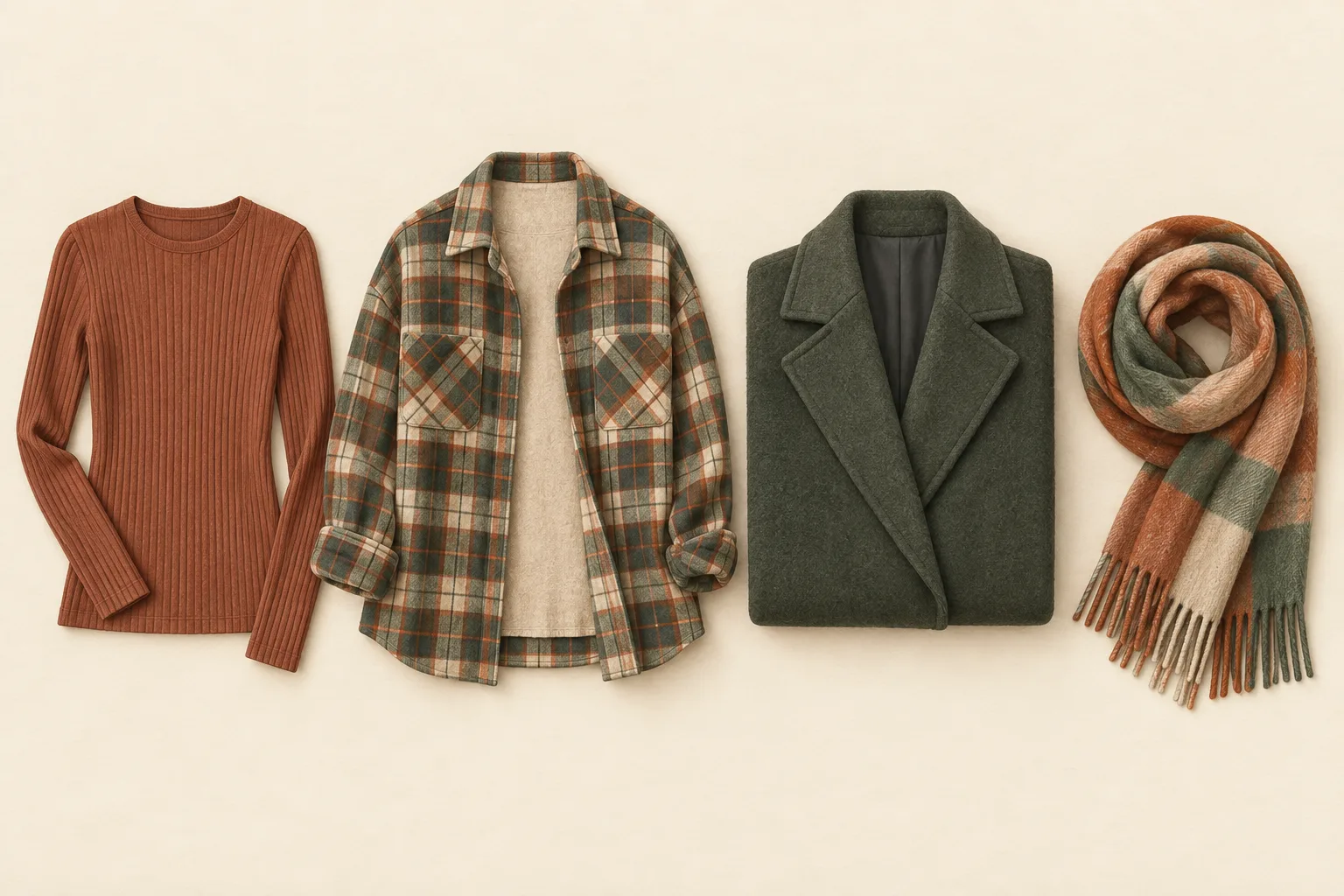
Fine merino, brushed cotton, jersey, silk and lightweight flannel compress and drape. Chunky acrylic, thick fleece, boiled wool and anything quilted hold their own shape and add every millimetre to your outline. You do not have to ban the chunky things, but count them: one bulky texture per outfit is the working limit, and it belongs on the outside.
Colour matters too. Layers in closely related tones read as one long shape, which is slimming and quietly expensive looking. Sharply contrasting layers cut you into horizontal bands wherever each hem falls, which works if you chose where they land. If you are unsure which tones sit well together on you, our guide to finding your palette beats guessing.
Layer for the day, not the morning
The real autumn problem is that one outfit has to cover a 10 degree swing. Build for that deliberately.
Pick layers you can remove and carry. A cardigan folds into a bag and a thin gilet packs down. A heavy jumper does neither, so overdress in one and you are stuck with it until evening. Check the forecast range rather than the current temperature, and dress for the middle of it with something removable on top, not for the cold walk to the car.
An autumn wardrobe is also physically scattered, half in rotation and half still boxed from summer. Doing the seasonal wardrobe switch properly, so the overshirts and fine knits are to hand, removes most of the daily friction. Deciding the night before removes the rest, which is the whole argument for planning outfits in advance.
Let the app do the combinatorics
Layering is a matching problem, and three bases, four mid layers and three coats is 36 combinations before you reach the trousers. You will default to the same two every time.
This is what Closet DJ is for. It builds outfits from the clothes you own, reads the forecast where you are, and suggests full layered combinations for the day rather than a single garment. The Style Assistant will tell you why one is not working, usually one of the three problems at the top of this article, and swap the offending layer for something else in your closet. Because it tracks what you wear, the fine knit you forgot you owned gets suggested as often as the jumper you reach for on autopilot.
Frequently asked questions
How do you layer clothes without looking bulky?
Go thin to thick outwards, keep only one bulky texture in the outfit and put it on the outside, and let each hem show 5 to 10 centimetres below the layer over it. Then balance the silhouette: if the top half is roomy, keep the bottom half slim, and show a waist, wrist or ankle somewhere so the outline has an edge.
What are the three layers of clothing?
A base layer that sits against the skin and moves moisture, a mid layer that traps air for warmth, and an outer layer that blocks wind and rain. In mild autumn weather you often need only two, and a base plus a windproof coat is warmer than a base plus a jumper with no wind protection.
What order should you layer clothes in?
Thinnest and most fitted first, loosest and longest last. Smooth fabrics go underneath so the layers above slide rather than catch, and each layer needs a little room over the one beneath it, since compressed insulation stops working. Open garments like unbuttoned shirts and cardigans go outside the things they frame.
How do you layer for autumn when it is cold in the morning and warm later?
Dress for the middle of the day's forecast range and add a removable top layer for the cold end. Choose one you can fold and carry, such as a cardigan, a light gilet or a packable shell, rather than a heavy jumper you would be stuck wearing all afternoon.
Stop rebuilding autumn outfits from scratch every morning. Closet DJ puts your layers together for the weather you are actually getting. Try it free.
Ready to remix your closet?
Try Closet DJ free. Organise your wardrobe and let AI build outfits from what you already own.
Recevez les nouveaux articles par e-mail
Un e-mail par nouvel article, écrit par l'équipe Closet DJ. Pas de spam, désabonnement à tout moment.