The Seasonal Wardrobe Switch: A Step-by-Step Guide

Twice a year, usually in a panic, most of us haul boxes down from a shelf and swap shorts for knitwear or the reverse. Done badly, the seasonal switch is an afternoon of mess that ends with wrinkled sweaters and a bag of "deal with later." Done well, it's the single highest-leverage wardrobe ritual of the year: a natural audit, a storage reset, and a fresh-start closet for the season ahead.
Here's the full process, refined to about three hours.
When to switch
Don't switch on a calendar date. Switch when the 10-day forecast stops dipping below (or rising above) your personal comfort line. A useful rule:
- Summer to autumn: when daily highs consistently sit below 20 C
- Autumn to winter: when you reach for a proper coat three days in a row
- Winter to spring: when you overheat in your default jacket
- Spring to summer: when bare ankles stop feeling optimistic
Keep a small "transition shelf" active for two or three weeks around each switch: one warm layer in spring, one light option in autumn. Weather doesn't read calendars.
Step 1: Empty, don't rummage (30 minutes)
Take the outgoing season's clothes out of the closet entirely. All of them, onto the bed. This feels excessive and it is the whole trick: you cannot audit what you cannot see, and a pile on the bed has a deadline built in. You have to finish before you sleep.
Step 2: The three-question sort (45 minutes)
Pick up each item once and answer three questions:
- Did I wear this at all this season? If no: why would next year be different? Be honest. Two seasons unworn is a donate.
- Is it in wearable condition? Pilled knits, broken zips, stretched collars: either it goes in a repair pile with a deadline, or it goes.
- Did I actually like wearing it? The items you wore reluctantly (nothing else was clean) are not keepers, they're gap-markers. Note what you were wishing you had instead.
You end with four piles: store, repair, release (donate or sell), and a shopping note that is actually a gap list, not a wish list.
If you track wears in an app, question 1 stops being guesswork. Closet DJ shows a wear count per item, so "did I wear this?" has a number on it, and the neglected list writes your release pile for you.
Step 3: Wash everything before it goes into storage (do this, seriously)
Every item goes into storage clean, even things that look clean. Two reasons:
- Moths and silverfish are drawn to body oils and food traces, not to fabric itself. A worn-once "clean" jumper is bait.
- Invisible stains oxidise. That faint splash of white wine or clear deodorant mark turns permanently yellow over months in a box.
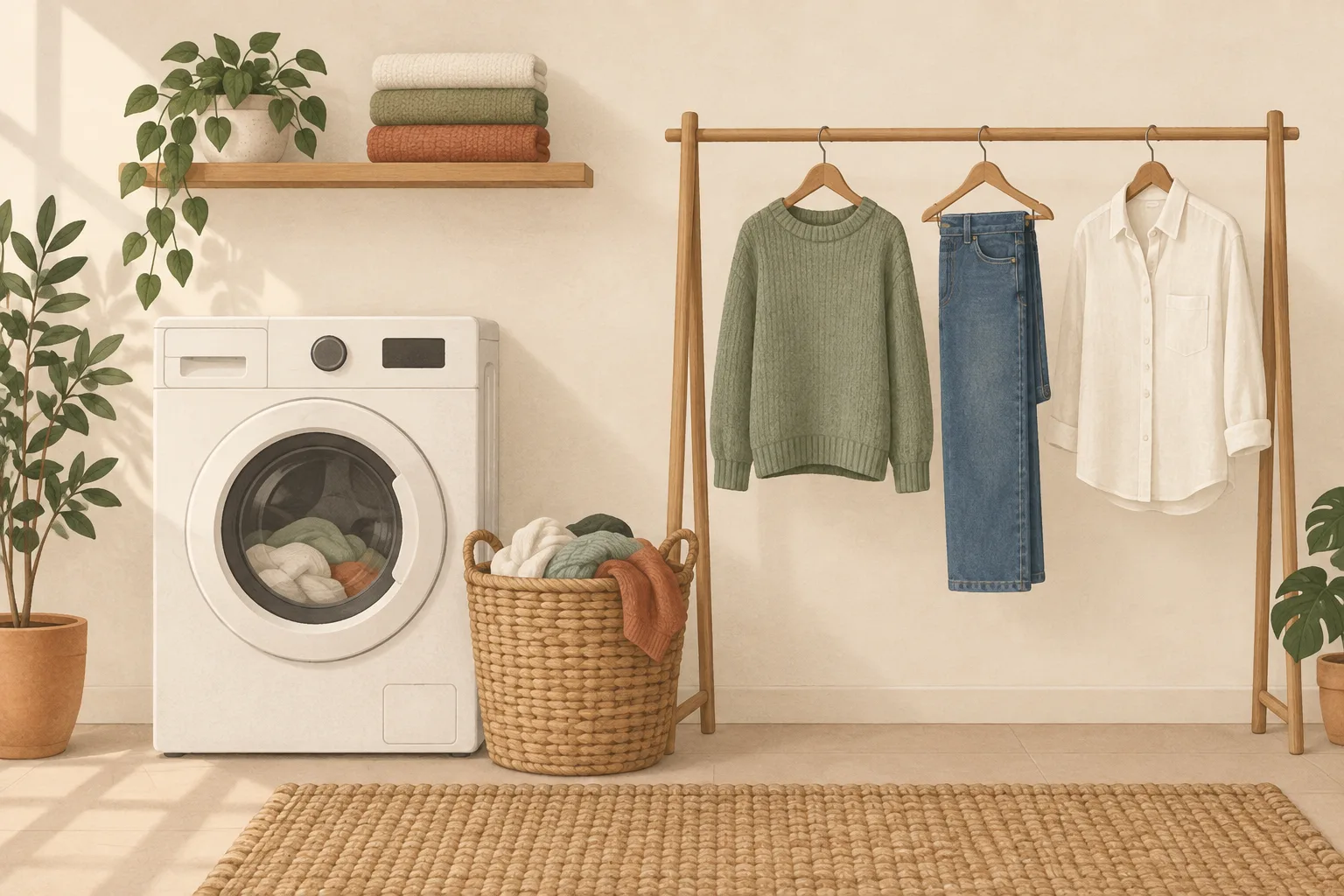
Skip fabric softener on storage loads (residue attracts pests too) and make sure everything is completely dry. Trapped moisture in a sealed box is how mildew happens.
While you're at it, decode the care labels properly so nothing gets ruined in the pre-storage wash. We wrote a full guide to laundry care symbols if the little tub-and-dots hieroglyphs have always been a mystery.
Step 4: Store like you mean it (30 minutes)
- Fold knits, never hang them. Hangers stretch shoulders into points over months. Heavy knitwear goes folded in breathable containers.
- Hang structured pieces. Coats, blazers, and dresses keep their shape on proper hangers inside garment bags.
- Breathable beats airtight for natural fibres. Cotton storage bags or lidded fabric boxes let wool breathe. Vacuum bags are fine for synthetics, puffers, and bedding, but they crush wool and down's loft if left compressed for many months.
- Cedar or lavender, not mothballs. Both deter moths without the chemical smell that takes three washes to remove. Refresh cedar by sanding it lightly each season.
- Label by category, not "misc." Future-you should be able to grab "winter knits" without opening four boxes.
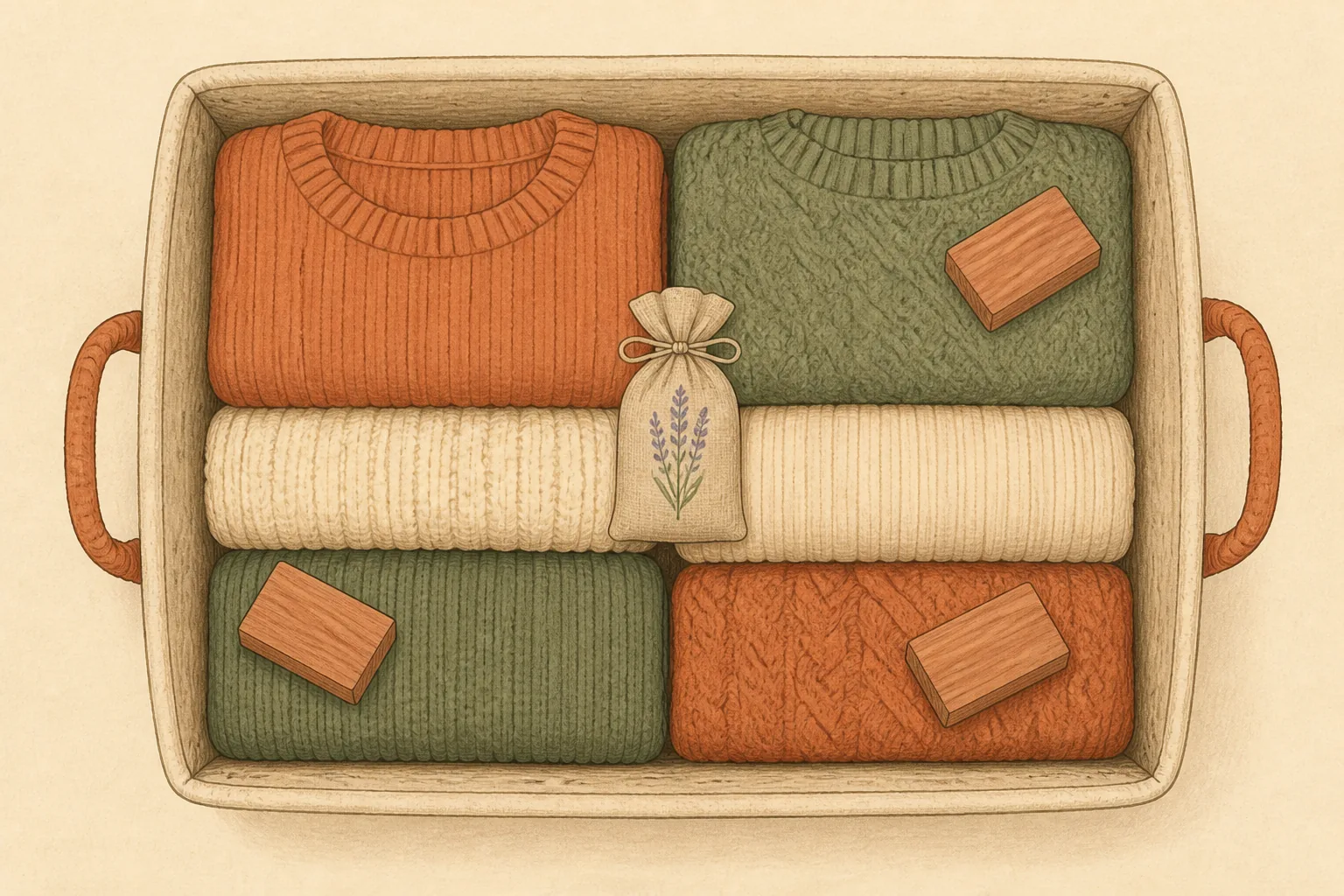
Store boxes somewhere cool, dark, and dry. Attic heat degrades elastic; damp basements are a mildew lottery.
Step 5: Set up the incoming season (45 minutes)
Unpack the incoming boxes and resist the urge to just cram everything in. Order matters:
- Steam or air anything creased. A day on a hanger fixes most storage folds.
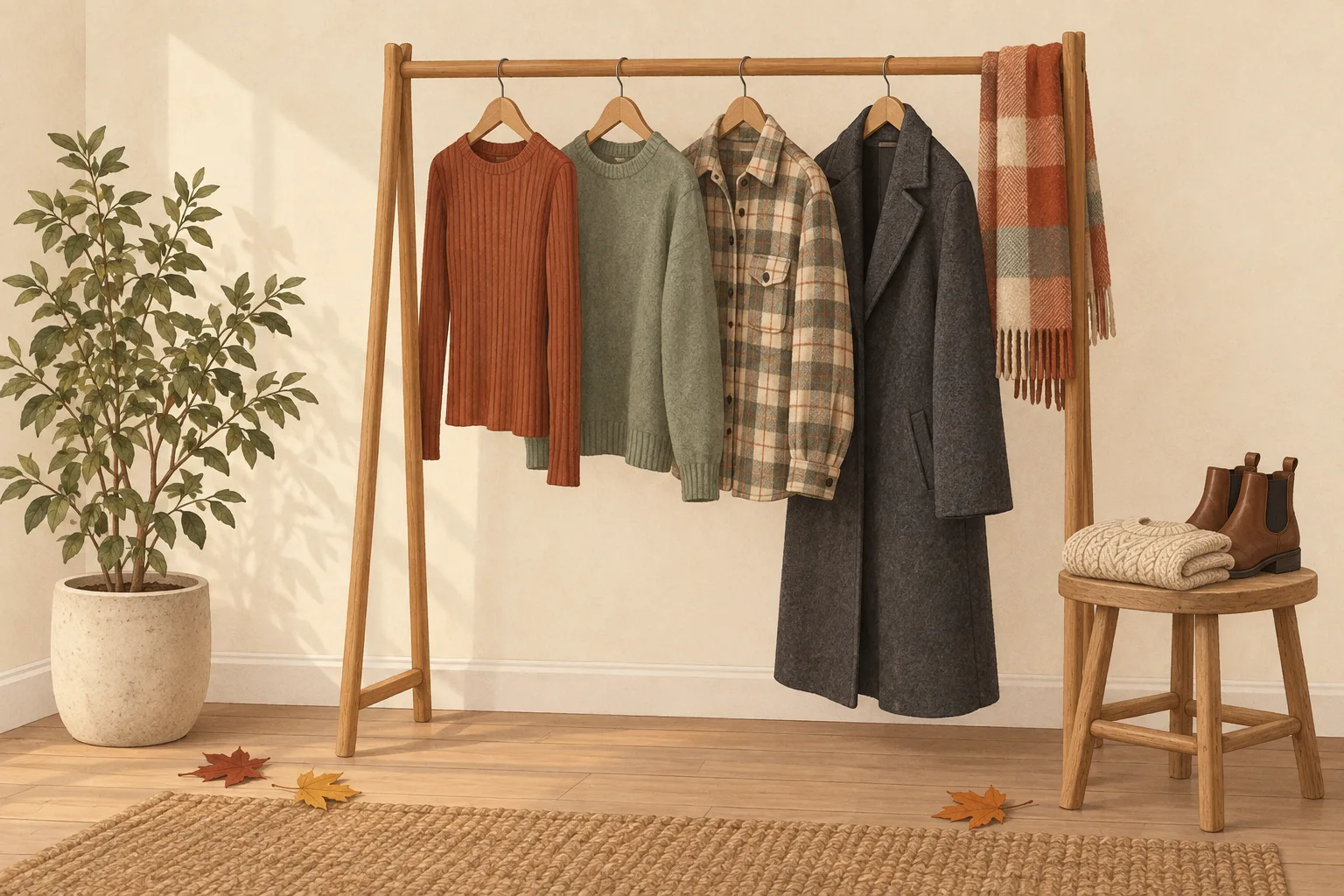
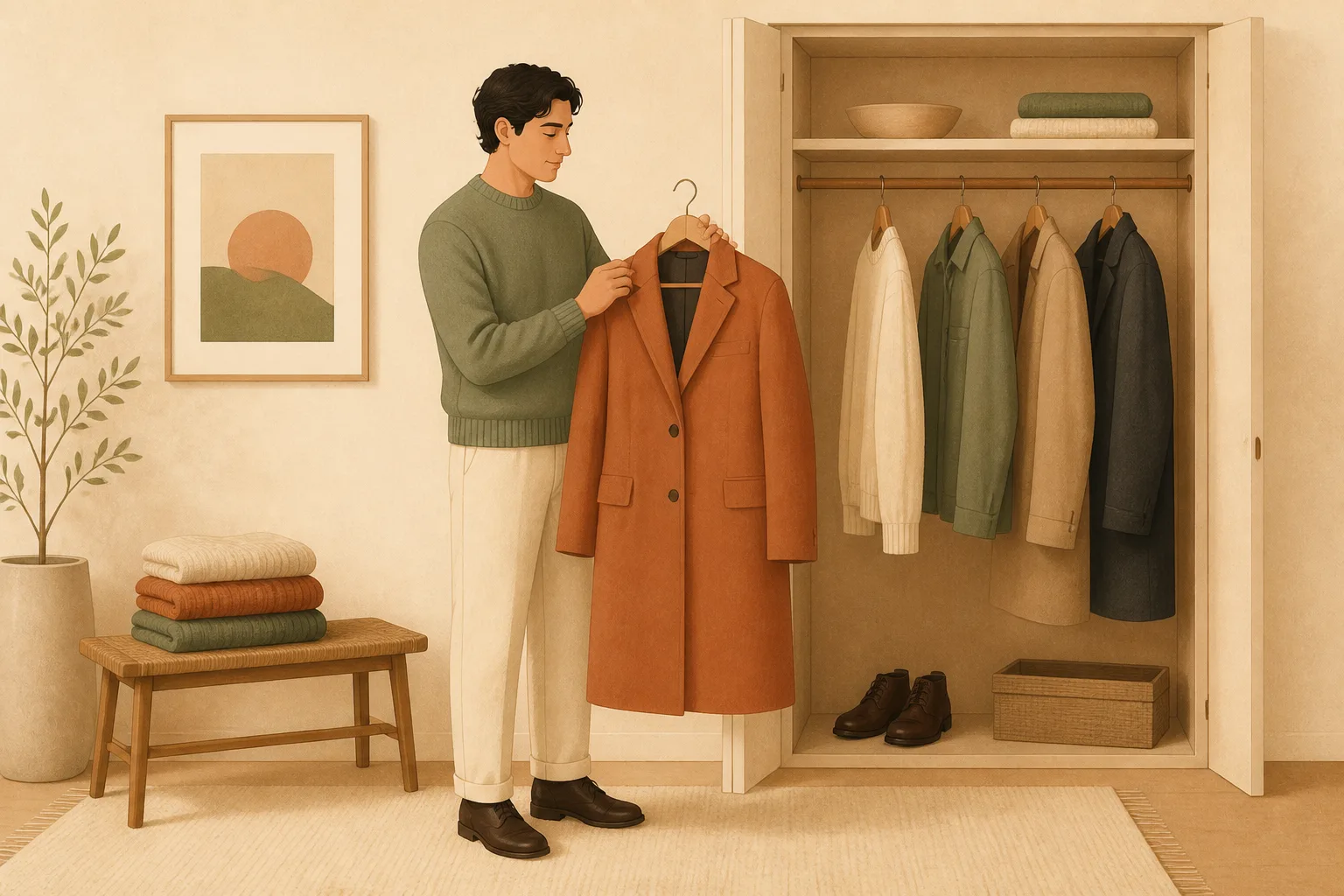
- Put the new season's core at eye level. The 15 to 20 pieces you'll wear most belong in the prime real estate. Occasionwear and edge cases go high or low.
- Group by category, then colour. Tops together, bottoms together, light to dark. Your brain finds things faster and gaps become visible.
- Do a five-outfit test. Before the week starts, build five outfits from what you just unpacked. If it's a struggle, you've found this season's real gap while there's still time to fix it deliberately.
If your closet is digitised, this is also the moment to update it: mark stored items as away, and let the app plan with what's actually available. Closet DJ's outfit generator only suggests from your active closet, so the switch keeps suggestions honest.
The payoff
A proper switch gives you three things:
- A curated active closet where everything visible is in season, clean, and liked
- An honest audit twice a year, which quietly keeps wardrobe growth in check better than any shopping ban
- Clothes that last longer, because storage damage (moths, stretching, yellowing) is where good pieces usually die
Three hours, twice a year. Few habits pay better.
Frequently asked questions
Do I need to switch seasonally if I live somewhere warm?
A full switch, maybe not. But the audit is worth doing on any calendar rhythm. Warm-climate closets accumulate just as much dead weight; there's just no natural forcing event, so put one in the calendar.
Are vacuum bags bad for clothes?
For synthetics and activewear, they're fine. For wool, down, and anything with loft or structure, long compression damages the fibres. Use breathable containers for natural fabrics.
How do I keep moths away without mothballs?
Wash everything before storage, use cedar blocks or lavender sachets, and check boxes once mid-season. Moths need undisturbed peace; a five-minute check breaks their cycle.
What if I don't have space to store the off-season?
Use the top shelf and under-bed zone for the off-season, and keep only the active season at reachable height. Even in one closet, the eye-level switch delivers most of the benefit.
Digitise your closet once and the seasonal audit becomes a ten-minute job. Closet DJ tracks wears, flags neglected items, and rebuilds your outfit options each season. Try it free.
Ready to remix your closet?
Try Closet DJ free. Organise your wardrobe and let AI build outfits from what you already own.
Ricevi i nuovi articoli via email
Una email per ogni nuovo articolo, scritta dal team di Closet DJ. Niente spam, puoi disiscriverti quando vuoi.