Laundry Care Symbols, Decoded (And a Routine That Saves Your Clothes)
Care labels are written in a hieroglyphic system that almost nobody was ever taught. So most of us default to "wash everything at 40 and hope," which is exactly how favourite jumpers become doll clothes and black jeans turn grey.
The system is genuinely simple once you know its five families. Ten minutes here will save you hundreds in ruined clothes.
The five symbol families
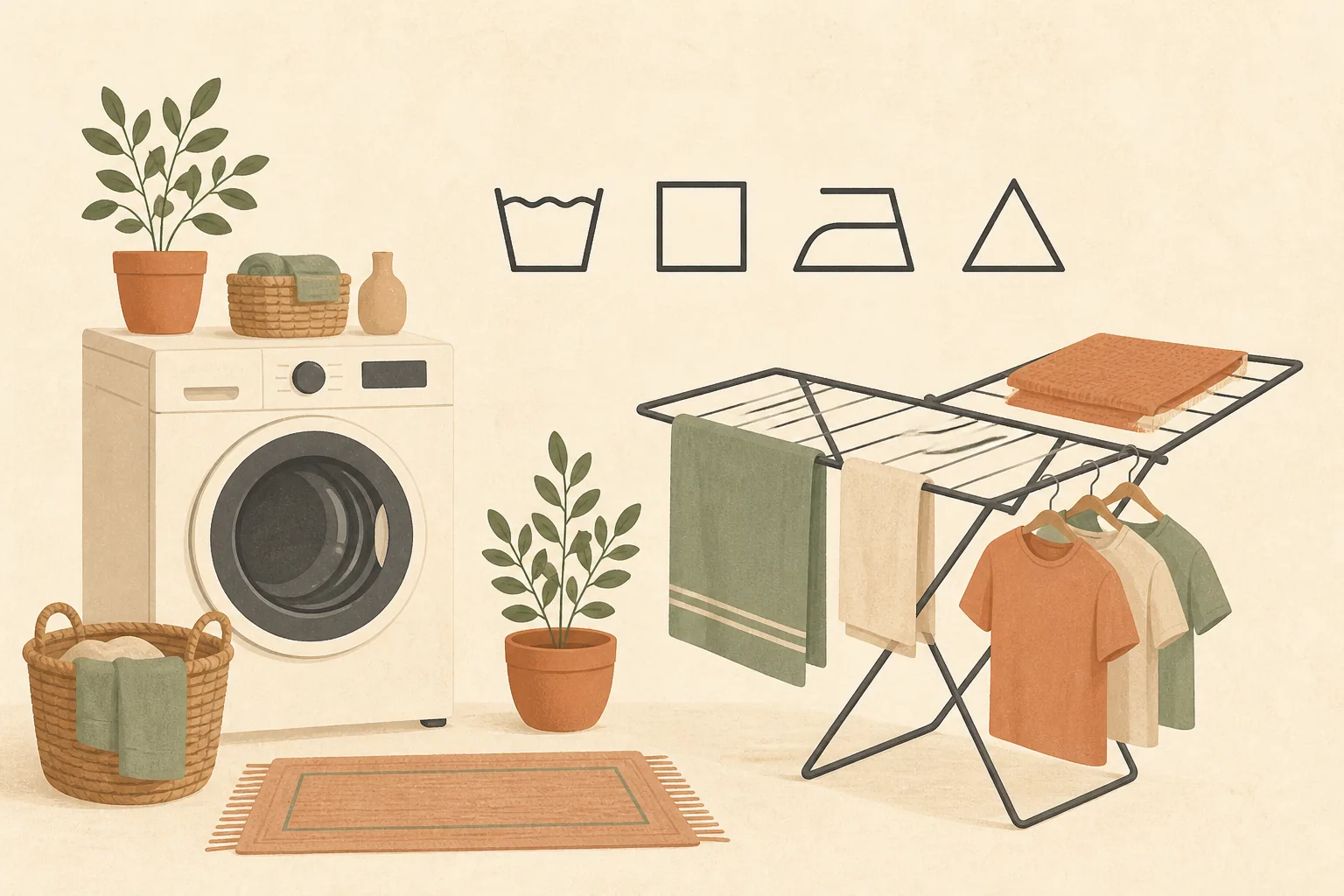
Every care label uses up to five base symbols:
- A tub of water = washing
- A square = drying
- An iron = ironing
- A triangle = bleaching
- A circle = professional cleaning (dry or wet cleaning)
Everything else is a modifier on these five. Two modifiers appear across all families:
- One line underneath = gentle. Reduce the intensity (synthetic or permanent-press cycle, lower spin).
- Two lines underneath = very gentle. Delicate or wool cycle, minimal agitation.
- A big X through any symbol = don't do it at all.
Washing: the tub
- Tub with a number (30, 40, 60): maximum water temperature in Celsius. This is a ceiling, not a target. Washing cooler than the label is always safe; hotter is how things shrink.
- Tub with dots instead of numbers (common on US labels): one dot is cold (30 C), two dots warm (40 C), three dots hot (50 C and up).
- Tub with a hand in it: hand wash only. In practice, most machines' dedicated hand-wash or wool programme is gentler than actual hands, so that's usually safe too.
- Tub with an X: do not machine wash at all. Check the circle symbol; this piece probably wants professional cleaning.
A useful default: wash at 30, gentle spin, and clothes last dramatically longer. Modern detergents work fine at 30. Reserve 60 for towels, bedding, and anything that touched a sick household member.
Drying: the square
- Square with a circle inside: tumble drying allowed. One dot = low heat, two dots = medium.
- Square with a circle and an X: no tumble drying, ever. This one X is responsible for more ruined knitwear than every other symbol combined. Elastane, wool, and anything fitted all belong here.
- Square with a horizontal line inside: dry flat. For knits, flat drying is what stops the shoulders and hems stretching under their own wet weight.
- Square with a vertical line (or lines): hang to drip dry.
- Square with a curve at the top: line dry on a hanger or line.
If you remember nothing else: when in doubt, don't tumble. Air drying is free, gentler on every fibre, and the main reason "old" clothes in some households still look new.
Ironing: the iron
- One dot: cool iron (110 C). Synthetics, acrylic, nylon. Anything hotter melts fibres shiny.
- Two dots: medium (150 C). Wool, polyester blends, silk with a pressing cloth.
- Three dots: hot (200 C). Cotton and linen, ideally still slightly damp.
- Iron with an X: no ironing. Use a steamer or the shower-steam trick instead.
Bleaching and dry cleaning: the triangle and circle
- Plain triangle: any bleach is fine (rare on modern labels).
- Triangle with two diagonal lines: oxygen bleach only, no chlorine. This is the common one; most "colour-safe" stain powders are oxygen bleach.
- Triangle with an X: no bleach of any kind.
- Circle: professional dry cleaning. The letters inside (P, F, W) tell the cleaner which solvent to use; you just need to know the circle means "take it in."
- Circle with an X: cannot be dry cleaned, which matters for pieces you assumed you'd "just dry clean."
The sorting routine that actually protects clothes
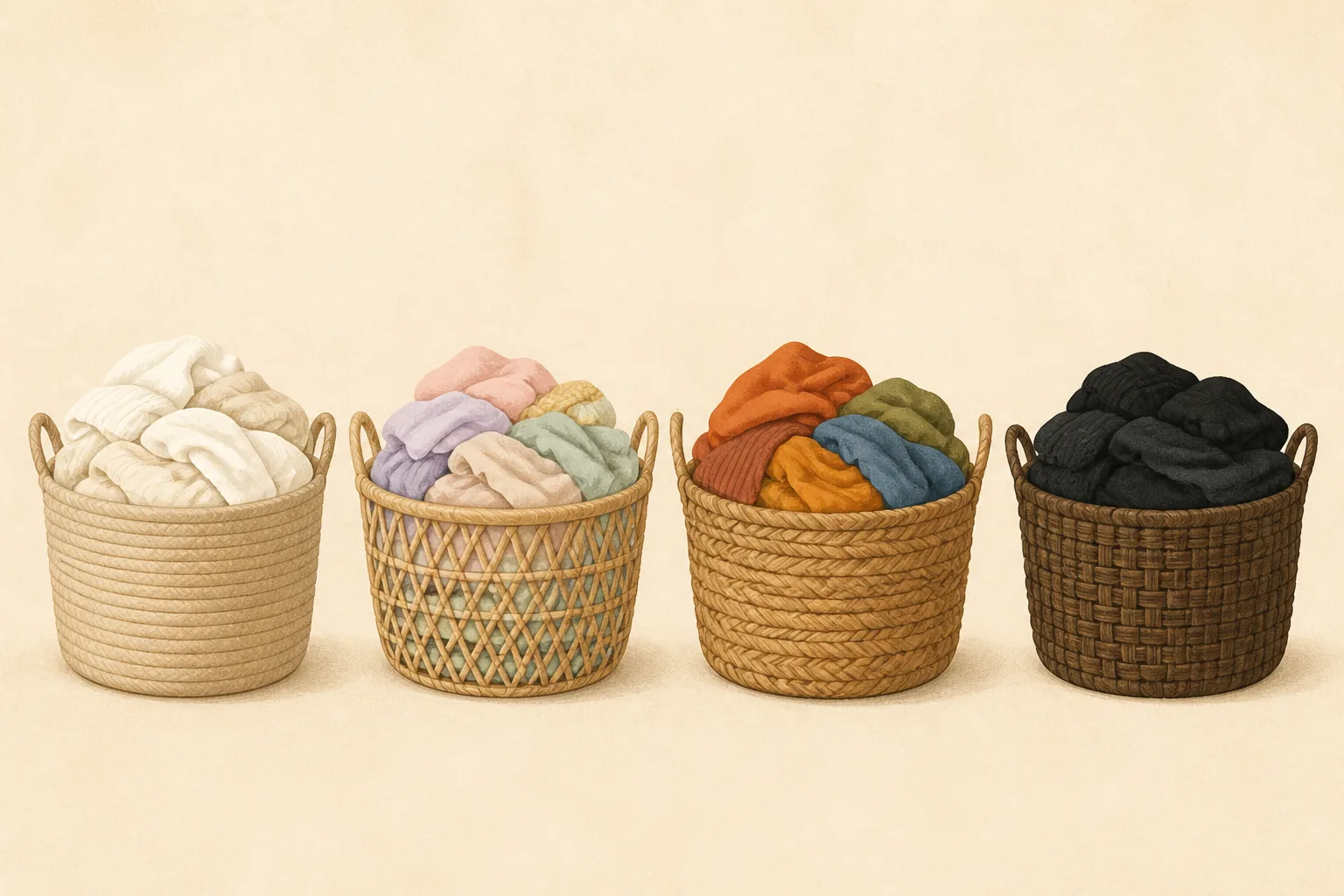
Symbols tell you the ceiling per garment; a good routine keeps you from having to think about it every load. Sort into four baskets:
- Whites: white and near-white cottons. Warm wash, oxygen bleach when needed.
- Lights: pastels, light greys, beiges. Cool wash.
- Colours: saturated colours and prints. Cold, inside out.
- Blacks and darks: cold, inside out, minimal detergent, air dry. Heat and friction are what fade black. Greys generally live happiest with the blacks: any dye transfer is invisible, and they share the cold-and-gentle needs.
Then two overrides that outrank colour:
- Delicates (wool, silk, anything with a hand-wash tub or two underlines) get their own gentle load in a mesh bag, whatever their colour.
- Heavy abrasives (raw denim, canvas, anything with velcro or exposed zips) wash together, away from knits they'd chew up.
Making the routine stick
The routine fails at the hamper, not the machine. If sorting happens on laundry day, it won't happen. Four baskets (or one divided hamper) where clothes get thrown means laundry day starts pre-sorted.
The other failure point is memory: which black jeans are the cold-wash-only pair? Was that jumper flat-dry? This is exactly the kind of per-item detail apps are better at than brains. Closet DJ has a laundry tracker built in: items carry their care needs, baskets mirror your sorting system, and you can see at a glance what's in the wash versus available when you're planning outfits for the week or packing for a trip.
Quick reference
- Wash at 30 unless something is genuinely dirty
- The number on the tub is a maximum, not a suggestion
- One underline = gentle cycle, two = delicates
- No-tumble X is the one you must never ignore
- Dry knits flat, dry blacks in the shade, iron synthetics cool
- Oxygen bleach for stains on anything coloured; chlorine only on a plain triangle
Frequently asked questions
What does the square with a circle and two dots mean?
Tumble dry on medium heat. One dot is low heat, an X through it means no tumble drying at all.
Can I ignore "hand wash only"?
Usually you can substitute your machine's wool or hand-wash programme with a mesh bag and gentle spin. True exceptions: structured pieces, beading, and anything vintage you'd cry about.
Why do my black clothes fade so fast?
Heat, friction, and detergent overdose. Wash cold, inside out, with half the detergent you think you need, and air dry. Fading is cumulative damage, so every hot cycle counts against you.
Do washing symbols differ between Europe and the US?
The shapes are the same. Europe puts temperatures in Celsius numbers on the tub; the US uses dots (one cold, two warm, three hot). The modifier lines and X marks mean the same everywhere.
Stop memorising care labels. Closet DJ stores each item's care needs and tracks what's clean, in the basket, or in the wash. Try it free.
Ready to remix your closet?
Try Closet DJ free. Organise your wardrobe and let AI build outfits from what you already own.
Neue Posts direkt ins Postfach
Eine E-Mail pro neuem Post, geschrieben vom Closet DJ Team. Kein Spam, jederzeit abbestellbar.