How Often Should You Actually Wash Your Clothes? A Garment by Garment Guide
Ask how often to wash jeans and you get everything from "after every wear" to "never, put them in the freezer". Neither is right, and the disagreement hides something useful: the answer is different for almost every garment you own, and it follows a rule you can apply yourself.
Here is the rule, then the chart, then the part that matters more than the chart.
Washing is the thing wearing your clothes out
It helps to know what a wash cycle actually does. Water, detergent and twenty minutes of mechanical agitation lift out soil, and they also abrade fibres, loosen dye and pull knitted structures out of shape. That grey fuzz in your tumble dryer filter is your clothes, leaving in small pieces.
So every wash is a trade. You are spending some of a garment's life to remove dirt. When there is dirt, that is a good trade. When you are washing a jumper worn for three hours over a shirt, it is not: you are paying the full cost and buying almost nothing. Over a year of laundering on autopilot, that is the difference between a wool jumper that lasts six seasons and one that pills into retirement after two. It is also, quietly, one of the biggest levers on cost per wear, because durability sits in the wear count rather than the price.
Three things actually make clothes need washing: body oils and sweat (mainly where fabric touches skin), visible soil, and odour. Notice that time is not on the list. A shirt that hung in your wardrobe for a month is exactly as clean as the day you hung it there.
The garment by garment guide
Treat these as starting points for normal indoor days in mild weather. Hot weather, heavy sweating and physical work all shorten them.
- Underwear, socks and gym kit: every wear. No exceptions, no debate. Sweat and skin contact are total.
- T-shirts and vests worn against the skin: every wear, or two in cool weather. These are doing the job underwear does on the top half.
- Shirts and blouses: one to two wears. Collars and underarms are the deciding parts. Check those, not the front.
- Bras: two to three wears. Rotating between a few lets the elastic recover between wears, which is what actually kills them.
- Jeans and heavy denim: five to ten wears. Denim is built to take soil and hides it well. Washing warps the fit you broke in and fades the dye faster than anything else you do to it.
- Chinos and smart trousers: three to five wears. Less forgiving than denim, still nowhere near a per wear garment.
- Jumpers and knitwear: five to six wears, more for wool. Wool resists odour on its own and hates agitation. If you wear something under it, you can go further.
- Dresses: one to three wears. Unlined and skin contacting behaves like a t-shirt. Lined and worn over other layers behaves like a jumper.
- Blazers and jackets: every few weeks of regular wear. Spot clean and brush between times.
- Coats: once or twice a season. Usually at the end, before storage.
- Pyjamas: three to four wears. You are clean when you put them on, which is the whole reason they last longer than day clothes.
Two bonuses, since everyone asks in the same breath: bed linen weekly (every two weeks at the outside), and bath towels after three or four uses, hung to dry fully in between.
Three questions that override any chart
A list cannot see your day. These can.
- Does it smell? Not when pressed to your face, which will convince you that everything is fine. Hang it up, walk away for an hour, come back and pick it up. Bacteria feeding on sweat is the real signal.
- Can you see anything? A mark, a cuff that has gone grey, a hem that has been through a puddle. Visible soil sets with time and often needs treating rather than a normal cycle.
- What touched skin, and how hard did you sweat? This single question sorts most wardrobes correctly. It is why underwear is per wear and a coat is per season.
If all three come back clean, the garment is clean. Put it back.
What to do instead of washing
Skipping the machine is only sensible if you do something else, and it takes about a minute.
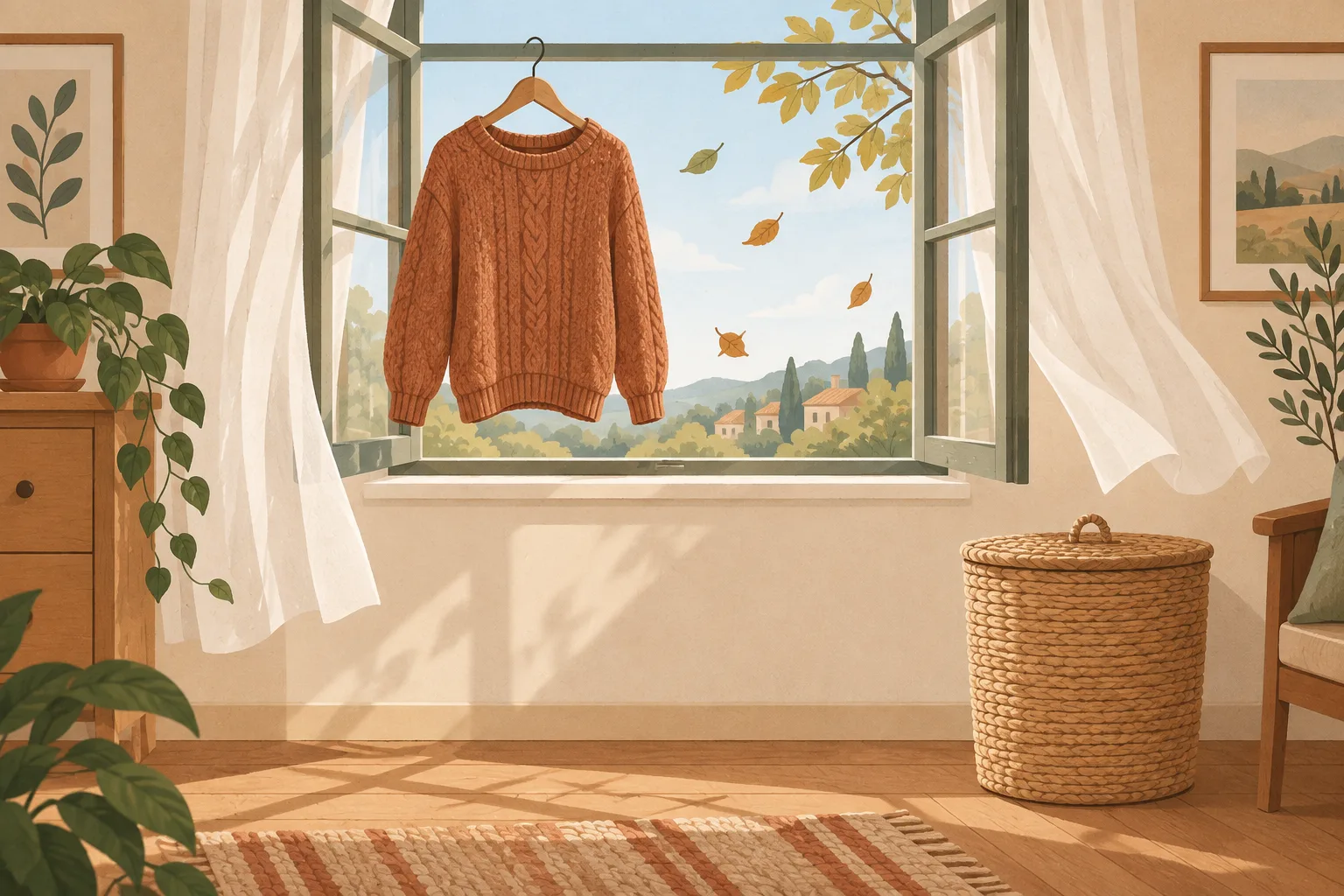
- Air it properly. Hang the garment somewhere with moving air for a few hours, ideally overnight, before it goes back in the wardrobe. Most day old odour is moisture and disappears on its own. Never put anything back while it is still damp.
- Spot clean. Cold water, a little detergent, a clean cloth, work from the outside of the mark inwards. This saves far more full cycles than any other habit.
- Brush and steam. A clothes brush pulls surface dust and hair off wool and tailoring. Ten minutes hanging in a steamy bathroom relaxes creases and lifts light smells.
- Ignore the freezer. It does not sanitise anything. Cold pauses bacteria, it does not kill them, and everything resumes when the garment warms up. Air is doing the work people credit to the freezer.
When you do wash, wash properly: cold, a full load, inside out for anything dark or printed, and read the labels first. Our laundry care symbols guide decodes those, and the sorting routine in it pairs neatly with everything here. Clothes going into storage are the one case where you always wash first: body oils you cannot see turn into stains and attract moths over a season in a box, which is step one of the seasonal wardrobe switch.
The hard part is remembering
None of this is difficult. It is just impossible to hold in your head. You genuinely cannot recall whether these jeans have had two wears or seven since the last wash, so the safe guess wins and everything goes in the basket.
That is a counting problem, and counting is what software is for. Closet DJ logs each wear as you plan and wear outfits, so the wear count since the last wash is something you look up rather than reconstruct. With laundry tracking on, anything you wear goes into a laundry basket until you mark it clean, and the app's AI outfit suggestions lean on clean pieces instead, so you are rarely handed an outfit built around a shirt sitting in the laundry basket. The chart above stops being advice you agree with and becomes something your wardrobe actually does.
Frequently asked questions
How often should you wash jeans?
Every five to ten wears for most people, and many denim makers suggest even less. Denim is heavy, hides soil well, and loses dye and shape in the wash faster than it loses cleanliness through wear. Air them between wears, spot clean marks, and wash cold and inside out when they genuinely need it.
How often should you wash a bra?
Every two to three wears, and rotate between at least three so each one gets a rest. The elastic needs time to recover its shape between wears, and that recovery, not the washing, is what decides how long a bra lasts. Hand wash or use a lingerie bag on a cold cycle, and never tumble dry.
Is it bad to wash clothes after every wear?
For underwear, socks and gym kit, no, that is correct. For everything else it shortens the life of the garment without making you meaningfully cleaner. Agitation, heat and detergent abrade fibres, fade dye and distort knits, so clothes washed on autopilot wear out several times faster than clothes washed when they are actually dirty.
How often should you wash a jumper or sweater?
Five to six wears for most knitwear, and longer for wool, which naturally resists odour. Wearing a t-shirt underneath extends it further, since the layer next to your skin takes the sweat and oils. Between wears, air the jumper flat or on a wide hanger, and brush off surface fluff rather than reaching for the machine.
Want to stop guessing? Closet DJ counts the wears for you, so you know exactly when something is due a wash. Try it free.
Ready to remix your closet?
Try Closet DJ free. Organise your wardrobe and let AI build outfits from what you already own.
Receba novos posts na sua caixa de entrada
Um e-mail por post novo, escrito pela equipe do Closet DJ. Sem spam, cancele quando quiser.